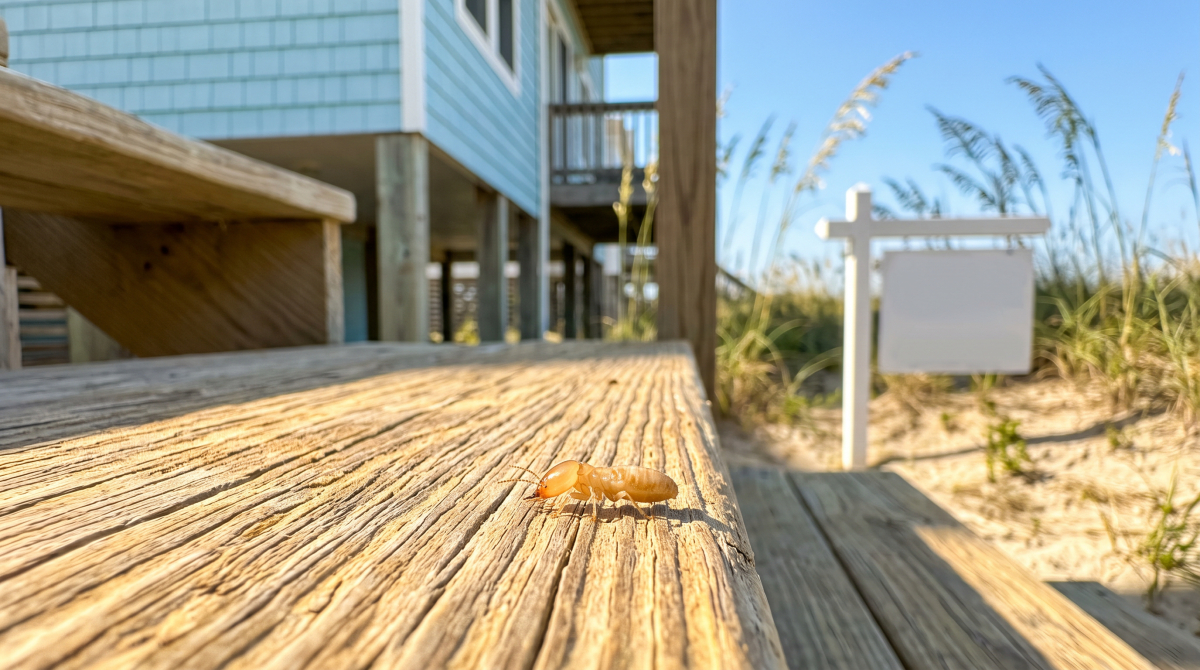
If you're under contract on a home in Leland, Southport or Oak Island, a WDIR is probably on your closing checklist. A WDIR in Brunswick County, NC is the state's official Wood-Destroying Insect Information Report, and it tells everyone at the closing table what a licensed inspector saw in and under the house. If you've bought a home in another state, this form may be new to you, because it's North Carolina's own. We'll walk you through what it is, what it covers and how to keep it from slowing down your closing.
McDuffie Pest Control has inspected Carolina homes since 1964. We know coastal crawl spaces, barrier island cottages and brand-new builds, and we know how tight a closing calendar can get.
What a WDIR Is in Brunswick County, NC
The North Carolina Department of Agriculture and Consumer Services (NCDA&CS) calls it the Official North Carolina Wood-Destroying Insect Information Report, Form No. WDIR 100. State rule 02 NCAC 34 .0602, as quoted in the Division's Spring 2026 bulletin, says any written statement about wood-destroying insects or their damage in a building for sale must be on the WDIR 100. In other words, a letter or report in some other format can't take its place.
Who Can Issue the Report
The NCDA&CS homeowners guide says the person who issues a WDIR must be licensed by the state's Structural Pest Control Section or work for a licensed company. The NCDA&CS Spring 2026 bulletin adds that the form must show the company name and a license number that includes a W phase. That's a quick thing to check on any report you receive.
How Common It Is in a Home Sale
In its consumer guide, NCDA&CS notes that this form is required on almost every home sold in North Carolina. A lender or buyer may ask for one, and your agent or closing attorney will usually tell you when it's due. If you went looking for a termite inspection for a home sale in Brunswick County, the WDIR is almost always what you need.
Why the WDI Report Matters for Leland, Southport and Oak Island Homes
Brunswick County holds a wide mix of homes. A new build in Leland, an older house in Southport and an island cottage on Oak Island each bring different questions to the inspection.
New Construction Around Leland
Leland is the largest town in Brunswick County, and new construction there never seems to stop, as our Leland page describes. A new home can still get a WDIR, because the state's rule covers any building for sale. Wood touching soil or poor grading can show up as conditions conducive to termites, even on a house that's only months old. A WDI report in Leland, NC gives a buyer a clear record from day one.
Older Homes in Southport
Our Southport page covers the town's historic district at the mouth of the Cape Fear River. Homes in older neighborhoods and newer ones alike face termite and moisture pressure in that river and marsh setting. A WDI inspection in Southport, NC looks closely at sills, floor framing and the places where porches meet the house.
Island Homes on Oak Island
Oak Island is a barrier island community with year-round residents, seasonal owners and vacation renters, per our Oak Island page. Salt air, sandy soil and high humidity are part of daily life there. A WDIR on Oak Island, NC includes the decks and porches that are permanently attached to the home, not just the main living space.
What the Inspector Looks At
NCDA&CS defines the inspection as a careful visual examination of all accessible areas of a building, plus sounding of accessible structural members. Sounding means tapping wood to listen for hollow spots. The NCDA&CS memorandum on Form WDIR 100 lists what the inspector must cover:
- Visible evidence: past or present signs of wood-destroying insects in, on or under the structure, including debris under the house.
- Attached structures: permanently attached decks, porches and storage sheds. Detached outbuildings are left out unless you request them.
- Inaccessible areas: spots the inspector couldn't reach that day, such as an area blocked by stored items. Inside walls and under floor coverings aren't listed one by one.
- Conditions conducive to subterranean termites: the three the state always requires are wood in direct soil contact, cellulose debris beneath the structure and excessively wet wood, which the state guide puts at 20% moisture content or more.
The insects most often noted are subterranean termites, powder post beetles, old house borers, carpenter ants and sometimes carpenter bees.
What the Report Does Not Cover
The WDIR is about insects only. NCDA&CS says it won't report wood rot or wildlife, and it isn't a structural damage report. Repairs belong with a contractor or structural engineer, and a repair invoice can be attached to the report later.
Reading Your Results
A WDIR is a snapshot of what was visible on inspection day. NCDA&CS is plain about this: the report isn't a warranty, and it isn't a "clearance letter." Termites can get through a crack as small as 1/32 of an inch, so new activity can show up after an inspection.
If the inspector finds evidence, the form has to say exactly where it is. "In crawl space" isn't specific enough under the Division's WDIR 100 enforcement policy. From there, the buyer and seller decide together whether to treat, and NCDA&CS guidance says a copy of any treatment agreement must be attached to the report. If you'd like to compare options, our termite services page explains liquid treatment and Sentricon bait systems.
When Moisture Shows Up on the Report
Moisture deserves attention in a coastal county. Crawl space wood at 20% moisture or more is on the state's short list of must-report findings. If your report flags it, you can dry out your crawl space with our help and lower the termite risk over time.
How McDuffie Handles Your Inspection
We keep the process simple so the paperwork never becomes the reason a closing slips. Here's how it usually goes:
- Tell us your dates. Share your closing or due diligence deadline when you call, and we'll plan around it.
- We inspect. A licensed technician checks the accessible crawl space, attic, interior and exterior, plus attached decks and porches.
- We complete the WDIR 100. Findings, locations, inaccessible areas and conducive conditions all go on the official form.
- We explain it. If something turns up, we walk you through it in plain words with no pressure.
We're Certified Sentricon Specialists, an Associate Certified Entomologist works on our team, and our founder trained in entomology at NC State. You can read more on our wood-destroying insect report page.
Frequently Asked Questions
Can I get a WDIR on a brand-new home in Brunswick County?
Yes. The rule applies to buildings for sale, and it doesn't carve out new construction. A report on a new home gives you a starting record for the years ahead.
I'm buying from out of state. Do I need to be there for the inspection?
Your agent can help arrange access to the home. Once the report is done, you can call us with any questions about the results.
How early should I book the inspection?
As soon as you're under contract. The state's guidance says the report should be obtained early in the transaction and read carefully by everyone involved. Booking early also leaves time to sort out any findings before closing day.
Will a beach rental's furniture or storage affect the report?
It can. Movable items that block the inspector's view must be listed as inaccessible. Clearing the crawl space entry, closets and attic access before we arrive helps us inspect more of the home.
Who should I call with questions about a report?
Start with us. For general questions about the form itself, the state's homeowners guide lists a phone number for its structural section: 984-236-4625.
Schedule Your WDIR in Brunswick County
Whether you're closing in Leland, Southport, Oak Island or nearby, an accurate report early in the deal keeps everyone on track. Our family-owned team has served the Carolinas for more than 60 years, and we'd be glad to help with your sale.
Contact McDuffie Pest Control and book a wood destroying insect report for your Brunswick County home. You can also call (910) 862-3635.