Fire Ants
Fire ants are one of the most aggressive and potentially dangerous pests homeowners deal with in southeastern North Carolina and northeastern South Carolina. Unlike household ant species that invade kitchens, fire ants are an outdoor threat. They build large mounds in yards, along walkways, and in open areas, and they attack in swarms when their nest is disturbed. For families with young children and pets, fire ant colonies in the yard are a serious safety concern that warrants prompt treatment.
The species found throughout the Carolinas is the red imported fire ant, an invasive species from South America that has become firmly established across the southeastern United States. They thrive in the warm, humid conditions of this region and are active from early spring through late fall.
Identifying Fire Ants
Knowing what you're looking at — and what to avoid — is the first step to protecting your family and pets.
Appearance
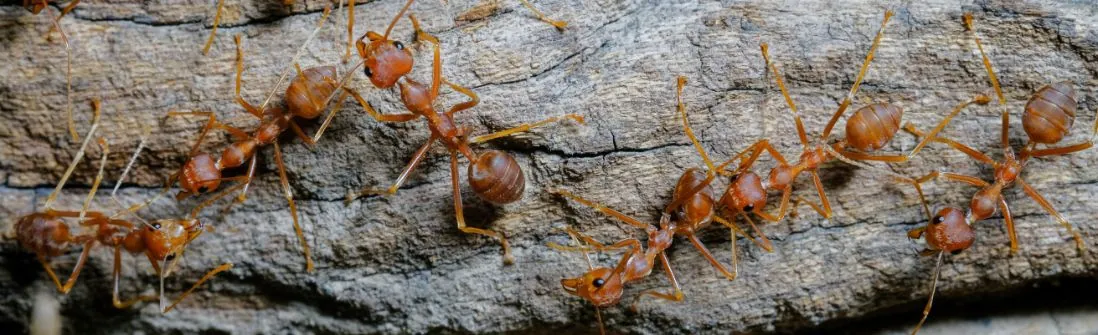
Small (1/8 to 1/4 inch), reddish-brown to dark brown. Workers within a single colony vary in size. Their bite grip and repeated stinging from the abdomen distinguishes them from other ant species.
Mounds
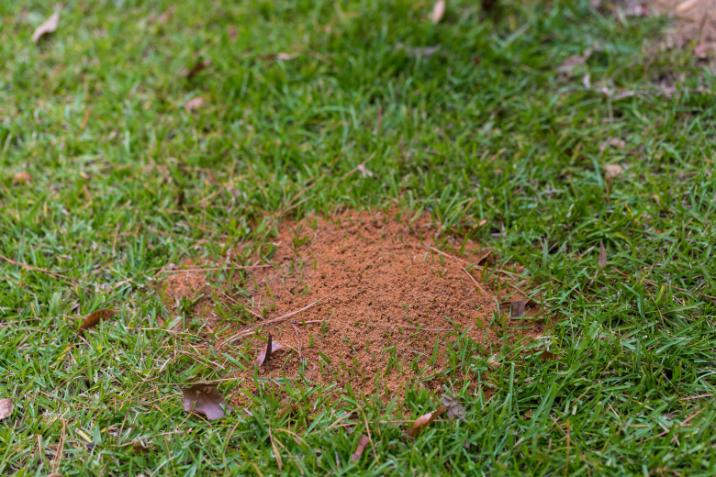
Dome-shaped piles of loose, finely worked soil, typically 6 to 18 inches in diameter. Unlike some ant mounds, fire ant mounds have no visible entry hole at the top — the ants enter and exit through underground tunnels at the base.
Common Locations
Sunny, open areas are preferred: lawns, pastures, playground areas, sidewalk edges, driveways, garden beds, and the base of trees and utility boxes. Mounds often appear rapidly after rain when colonies push soil to the surface.
Fire Ant Sting Risks
Fire ant stings are the primary concern with this pest. When fire ants attack, they first bite to grip the skin, then pivot and sting repeatedly from their abdomen. A person who disturbs a mound can receive dozens of stings within seconds.
- Typical reaction — Immediate burning pain followed by red, swollen welts. Within 24 hours, each sting typically develops a small white pustule. Avoid breaking pustules, as this increases infection risk.
- Allergic reactions — A small percentage of people experience anaphylaxis. Symptoms include difficulty breathing, swelling of the face or throat, rapid heartbeat, and dizziness. Anaphylaxis is a medical emergency. If anyone in your household has a known insect sting allergy, fire ant colonies warrant urgent treatment.
- Children and pets — Young children and pets are at the highest risk because they may not recognize a mound or react quickly enough to move away from a swarm. Dogs are frequently stung on their paws and underbelly.
How McDuffie Treats Fire Ants
Fire ant control requires a targeted approach because the queen is deep underground and the colony can contain hundreds of thousands of workers.
Inspection: We survey your property to locate all visible mounds and identify high-risk areas near play areas, walkways, patios, and pet zones.
Direct mound treatment: Individual mounds are treated to eliminate the colony, including the queen. This provides fast knockdown of the active population.
Broadcast treatment: For properties with heavy fire ant pressure, we apply broadcast bait treatments across the yard. Worker ants carry the bait back to the colony, eliminating colonies you can see as well as those that haven't yet built visible mounds.
Ongoing monitoring: Fire ants are persistent, and new colonies can establish from neighboring properties. Our quarterly and tri-annual service plans include fire ant monitoring and re-treatment as part of every visit.
Fire Ant Prevention Tips
Fire ants are difficult to prevent entirely because new queens can fly in from surrounding areas. However, these steps help reduce activity on your property.
Monitor your yard regularly. Walk the property weekly during the active season (spring through fall) and watch for new mounds, especially after rain.
Treat mounds promptly. The sooner a new mound is addressed, the smaller the colony and the easier it is to eliminate. Don't wait for mounds to grow large.
Keep grass mowed. Shorter grass makes mounds easier to spot and reduces the sheltered conditions fire ants prefer.
Be cautious around mounds. Never kick or disturb a fire ant mound. Teach children to recognize and avoid them. Keep pets away from visible mounds until they've been treated.
Consider a service plan. Ongoing professional treatment is the most reliable way to keep fire ant populations suppressed across your property throughout the active season.
Schedule a Free Fire Ant Estimate
If fire ant mounds are appearing in your yard, don't wait for someone to get stung. Contact McDuffie Pest Control to schedule a free estimate. We'll survey your property, treat active colonies, and recommend a plan to keep fire ant populations under control throughout the season.
Schedule a Free Estimate
Frequently Asked Questions
How dangerous are fire ant stings?
For most people, fire ant stings cause pain, swelling, and pustules that resolve within a week or two. However, a small percentage of people experience severe allergic reactions including difficulty breathing, swelling of the face or throat, and anaphylaxis. Multiple stings from a swarm can also be serious for anyone, regardless of allergy status, particularly for young children, elderly individuals, and pets.
Why do fire ant mounds keep coming back?
Fire ants are an established invasive species across the southeastern United States, and new queens regularly fly in from surrounding areas to establish colonies. Treating individual mounds eliminates those colonies, but without ongoing treatment, new ones will establish over time. A quarterly or tri-annual service plan that includes fire ant monitoring is the most effective way to keep your yard consistently protected.
Can I treat fire ants myself?
Over-the-counter fire ant products can kill individual mounds, but they often miss the queen or drive the colony to relocate rather than eliminate it. Professional treatment combines direct mound treatment with broadcast baits that reach colonies you can't see yet. This dual approach provides more thorough and longer-lasting results.
When are fire ants most active?
Fire ants are most active from early spring through late fall in the Carolinas, with peak colony growth in the warm summer months. They're particularly visible after rain, when colonies push soil to the surface. During extreme heat, they may forage more in early morning and evening hours. Colonies remain alive underground during winter but are much less active.