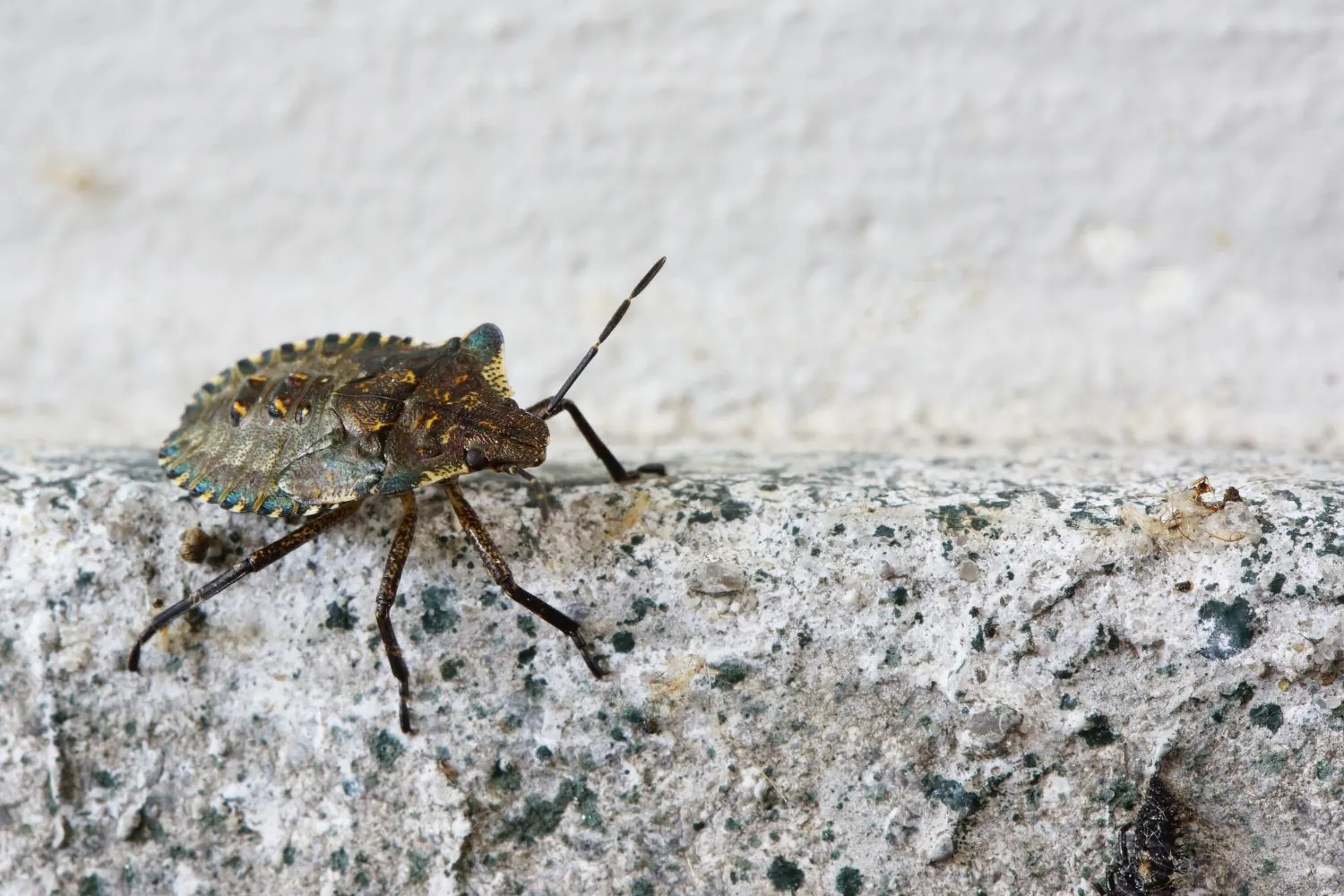
Stink Bugs
The brown marmorated stink bug is an invasive species originally from Eastern Asia that has become a well-established seasonal pest across the southeastern United States. If you've lived in North Carolina or South Carolina for any length of time, you've probably encountered them: large, shield-shaped insects that invade homes in the fall seeking warmth, then make their presence known through the rest of the winter — often with an unpleasant odor when disturbed or crushed.
Stink bugs don't cause structural damage and they don't bite. But they enter homes in large numbers, they're difficult to remove once inside, and the defensive odor they release when handled or vacuumed makes them one of the more frustrating nuisance pests homeowners deal with each year.
Identifying Stink Bugs
Brown marmorated stink bugs are easy to identify once you know what to look for.
Size and Shape
About 3/4 inch long and nearly as wide as they are long, with a distinctive shield-shaped body. Mottled grayish-brown with dark bands on the wings and alternating light and dark bands on the antennae.
The Odor
Their signature characteristic. When threatened, handled, or crushed, stink bugs release a pungent odor from glands on their thorax. The smell is often described as sharp, herbal, or similar to cilantro. It can linger on hands, clothing, and surfaces — so avoid crushing them.
Seasonal Behavior
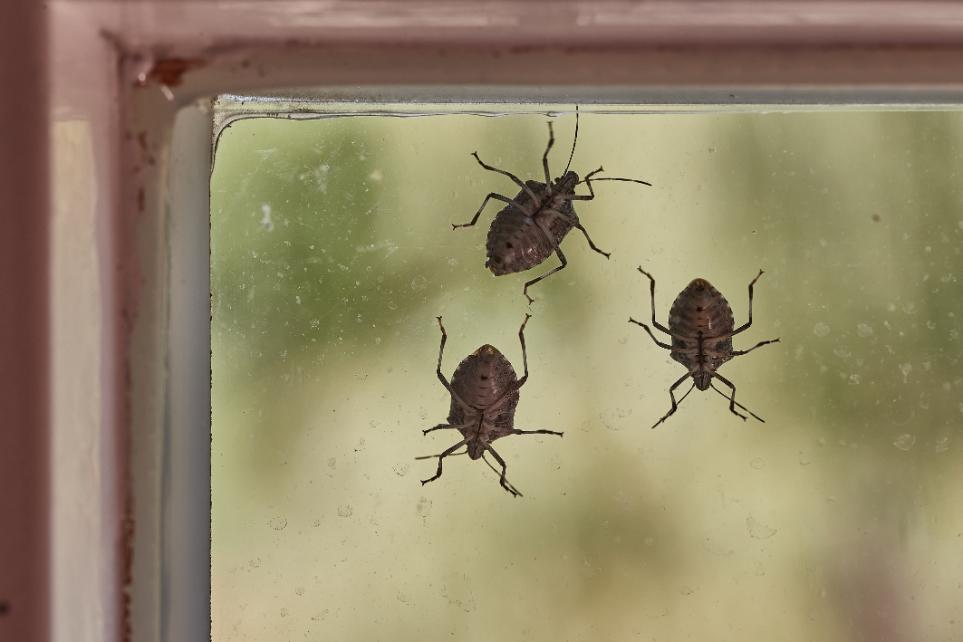
In late summer and early fall, as temperatures begin to drop, stink bugs seek warm surfaces to overwinter on. They're attracted to the sunny sides of buildings and enter through gaps in siding, window frames, door frames, soffits, chimneys, and damaged screens.
Signs of Stink Bug Activity
By the time you're seeing stink bugs inside your home, they've already gotten past the exterior. Prevention is most effective before the fall migration begins.
- Clusters on sunny exterior walls — In fall, groups of stink bugs gather on the south- and west-facing sides of your home, near rooflines, windows, and siding joints.
- Stink bugs appearing indoors on warm days — Finding them in living areas during winter or early spring means they've already overwintered in your walls or attic and are becoming active again.
- Dead stink bugs in windowsills and light fixtures — A telltale sign they overwintered in the home and didn't survive or are emerging and getting trapped.
- The smell without seeing a bug — One may have been crushed or disturbed behind a wall, in a vent, or inside a light fixture.
How McDuffie Treats Stink Bugs
Treatment is most effective as a preventive measure applied before the fall migration.
Exterior treatment: We apply a perimeter treatment to the exterior of your home in late summer or early fall, targeting the entry points stink bugs use — window frames, door frames, soffits, roofline junctions, and siding gaps. This creates a barrier that kills or repels stink bugs before they enter the structure.
Entry point sealing: We identify and recommend sealing gaps, cracks, and other access points that stink bugs exploit during the fall migration.
Interior treatment: For homes where stink bugs have already overwintered inside, we treat attic spaces, wall voids, and interior harborage areas to reduce the active population.
Stink bug prevention is included in our quarterly and tri-annual service plans. The fall service visit is timed to coincide with the beginning of stink bug migration season.
Stink Bug Prevention Tips
Seal entry points before fall. Caulk gaps around windows, doors, siding joints, and utility penetrations. Pay special attention to the upper portions of the home near the roofline and soffits, where stink bugs tend to concentrate.
Repair or replace damaged screens. Check window screens and screen doors for tears or gaps. Even small openings are enough for stink bugs to enter.
Check weatherstripping on doors and windows. Worn or compressed weatherstripping creates gaps that stink bugs exploit.
Cap chimneys and cover attic vents. Fine mesh screening over attic vents and chimney caps prevents stink bugs from entering these common access points.
Avoid crushing stink bugs. The odor released when they're crushed can attract other stink bugs and stains surfaces. Use a tissue or piece of cardboard to pick them up and flush them, or vacuum them with a disposable bag.
Schedule a Free Estimate
If stink bugs are invading your home each fall, contact McDuffie Pest Control to schedule a free estimate. We'll identify the entry points, recommend sealing measures, and apply preventive treatment timed to the fall migration season.
Schedule a Free Estimate
Frequently Asked Questions
Why do stink bugs smell so bad?
The odor is a defensive mechanism. Stink bugs release a chemical compound from glands on their thorax when they feel threatened, are handled, or are crushed. The smell deters predators in the wild. Avoid crushing them and instead remove them by flushing or trapping.
When is the best time to treat for stink bugs?
Late summer to early fall, before the migration begins, is the most effective time for preventive treatment. Once stink bugs are inside your walls and attic, they're much harder to reach. A perimeter treatment applied in August or September creates a barrier that intercepts them before they enter. Our quarterly and tri-annual service plans include this fall treatment as part of the regular schedule.
Can stink bugs damage my home?
Stink bugs don't cause structural damage, don't bite, and don't reproduce indoors. They're strictly a nuisance pest. The main concerns are the odor, the sheer number that can accumulate in a home over the fall, and the staining their secretions can cause on walls and fabrics.
Why do I see stink bugs in winter?
Stink bugs that entered your home in the fall are overwintering in wall voids, attic spaces, and other sheltered areas. On warm, sunny days, the heat reactivates them and they wander toward light and warmth, emerging into living spaces. This doesn't mean they're breeding indoors — they're simply waking up temporarily before returning to dormancy.