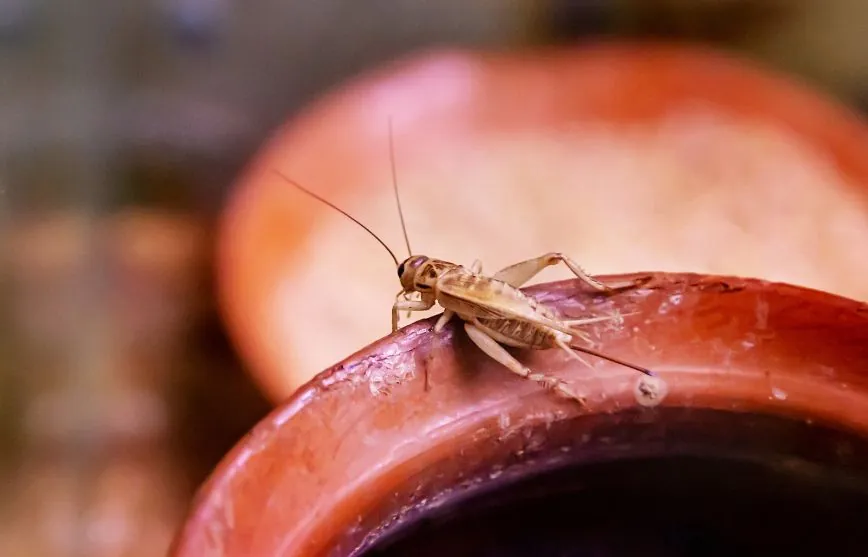
Crickets
Crickets are a common nuisance pest across southeastern North Carolina and northeastern South Carolina, particularly in late summer and fall when they move toward homes seeking warmth and shelter. House crickets produce a loud, repetitive chirping that's difficult to ignore at night. Camel crickets don't chirp but tend to startle homeowners with their appearance and erratic jumping behavior when disturbed in dark spaces.
In large numbers, crickets can also damage fabrics, paper goods, and stored items. If you're dealing with more than the occasional cricket finding its way inside, there's usually an underlying access or moisture issue worth addressing.
Common Cricket Species in the Carolinas
Two species account for most cricket problems in this region, and they behave quite differently.
House Crickets
Light yellowish-brown, about 3/4 to 1 inch long, with long antennae and prominent hind legs. Males produce the familiar chirping sound by rubbing their wings together, typically at night. They're attracted to warmth and light, which is why they gather near exterior doors and porch lights. They feed on fabrics, paper, pet food, and other insects.
Camel Crickets (Cave Crickets)
Light to dark brown, humpbacked, with long antennae and oversized hind legs. They don't have wings and can't chirp, but they're strong jumpers and tend to leap toward perceived threats. Moisture-dependent, preferring crawl spaces, garages, basements, and utility rooms. Their presence indoors is a reliable indicator of excess moisture.

Signs of a Cricket Problem
- Chirping at night — Persistent nighttime chirping inside the home indicates house crickets have established themselves indoors, not just near the exterior.
- Damage to fabrics and paper — Irregular holes or chewed edges on clothing, curtains, wallpaper, book bindings, or cardboard stored in garages and closets.
- Sightings in dark, damp spaces — Regularly finding camel crickets in crawl spaces, basements, or utility rooms points to a moisture condition sustaining a population.
- Large numbers near exterior lights — Crickets clustering around porch lights and entry doors at night are being drawn by light and warmth, and many will find their way inside through gaps.
How McDuffie Treats Cricket Problems
We identify the species, locate entry points, and assess moisture conditions that may be contributing to the problem. For camel crickets, the crawl space is usually the first place we check.
We treat entry points, perimeters, and interior harborage areas to reduce the active population. Camel crickets are closely tied to humidity — if crawl space moisture is contributing, we'll recommend appropriate moisture control measures.
Cricket control is included in our quarterly and tri-annual service plans, and our free callback policy covers any activity between scheduled visits.
Cricket Prevention Tips
Switch exterior lighting. Replace white bulbs near doors with yellow or sodium vapor bulbs, which are less attractive to crickets and other insects.
Seal entry points. Caulk gaps around doors, windows, pipes, and foundation cracks. Check weatherstripping and door sweeps, especially on garage doors.
Reduce moisture. Address crawl space humidity with proper ventilation, vapor barriers, or encapsulation. Fix leaking outdoor faucets and ensure gutters drain away from the foundation.
Clear debris from the foundation perimeter. Leaf piles, tall grass, mulch buildup, and stacked firewood near the house create harborage for crickets and other pests.
Store fabrics and paper goods in sealed containers. Sealed plastic bins protect items from cricket damage in garages and storage areas.
Schedule a Free Estimate
If crickets are showing up regularly inside your home, contact McDuffie Pest Control to schedule a free estimate. We'll identify the species, find out how they're getting in, and recommend a plan that addresses both the crickets and the conditions attracting them.
Schedule a Free Estimate
Frequently Asked Questions
Are crickets harmful?
Crickets don't bite or sting and aren't considered dangerous. However, they can damage fabrics, paper goods, wallpaper, and stored items when present in large numbers. House crickets also produce persistent nighttime chirping that can disrupt sleep. Camel crickets can indicate a moisture problem in your crawl space or basement that's worth addressing.
Why are there camel crickets in my crawl space?
Camel crickets are moisture-dependent and seek out dark, humid environments. A crawl space with elevated humidity, poor ventilation, or standing water is an ideal habitat. Reducing the moisture level through vapor barriers, encapsulation, or dehumidification is the most effective long-term solution. Visit our moisture and crawl space services page for more information.
Why do crickets come inside in the fall?
As temperatures drop, crickets move toward warm structures. They're also attracted to light, which draws them to doors and windows in the evening. Once near the house, they enter through gaps in doors, windows, and the foundation. Sealing entry points and switching to less attractive exterior lighting can significantly reduce the number getting inside.
How much does cricket treatment cost?
Pricing depends on the severity of the problem and whether moisture conditions need to be addressed. Contact us for a free inspection and customized quote. Many homeowners find that a quarterly or tri-annual service plan is the most cost-effective approach because it covers crickets along with other common pests year-round.