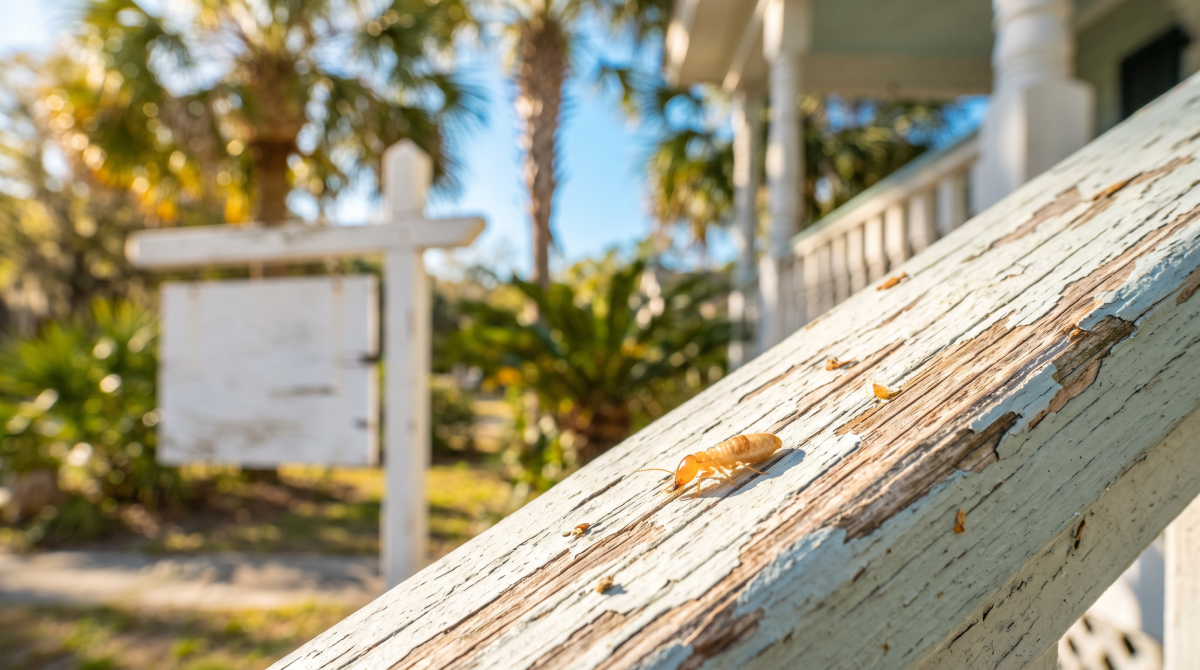
Selling a home near the waterway, or buying your first place in Little River? Somewhere between the offer and the closing table, a lender or buyer may ask for a CL-100 inspection. In Little River, SC, that report is South Carolina's official record of what a licensed inspector found about termites and other wood-destroying organisms in the home. McDuffie Pest Control provides CL-100 reports for buyers, sellers and agents across northeastern Horry County.
Our family-owned company has served the Carolinas since 1964, and we have a technician based in the Myrtle Beach area who covers Little River and the nearby communities. Below, we explain what the report includes, how the inspection works and what to do if something turns up.
What a CL-100 Report Is
The CL-100 is the form for the Official South Carolina Wood Infestation Report. The South Carolina Department of Pesticide Regulation (DPR) at Clemson University, which regulates pesticide use and licensing in the state, refers to it by that name in its Wood Infestation Report training. North Carolina uses its own wood-destroying insect report, so a CL-100 report in Little River follows South Carolina's rules.
The Rules Behind the Form
The standards live in South Carolina's regulations for the Pesticide Control Act, in Regulation 27-1085, Section K. Under that rule, a wood infestation report issued for the sale or mortgage of a property must be signed and dated by a licensed individual. It must also be written on the most current official form published by the Department.
How It Differs From a General Termite Inspection
A routine termite inspection helps you protect a home you already own. The CL-100 is a transaction document. It follows a set format, it has to cover specific areas, and it has to disclose specific findings, so everyone involved in the sale is reading the same kind of record.
What the Inspection Covers
South Carolina's regulation sets a minimum scope for every wood infestation report. That gives buyers and sellers in Little River a clear idea of what the inspector will look at. Under Regulation 27-1085 K, the inspection must include:
- A visual inspection. All accessible parts of the interior and exterior, including crawlspaces, utility areas and attics.
- Sounding and probing. Careful checks of any area where damage is visible.
- Moisture readings. Wood moisture readings around the inside perimeter of the crawlspace and in the reachable center of it.
- Insect activity. The type and activity of any visible wood-destroying insect infestation.
- Insect damage. The type and cause of any visible wood-destroying insect damage.
- Wood-destroying fungi. The type and activity of wood-destroying fungi, including decay damage, in the structure below the first main living-area floor.
What Gets Disclosed
The report must list every part of the structure that the inspector couldn't reach. It must also state whether visible insect damage is present or absent in the areas that could be reached. If a storage room is packed full or a crawl space hatch is blocked, that limit goes on the report, so it helps to clear access before the visit.
What the Report Does Not Cover
The regulation is clear that a wood infestation report is not a report on health-related fungi or the conditions that lead to them. If you have mold questions, those call for a separate conversation. The CL-100 stays focused on wood-destroying organisms, meaning insects and wood-decay fungi, and the related damage and moisture conditions it's required to record.
Why a CL-100 Matters in a Little River Home Sale
Little River sits at the northern tip of the Grand Strand along the Intracoastal Waterway, and the warm, humid coastal climate keeps termites active. In a market like this, a clear, current report gives everyone at the table something solid to work from. Here's how it helps each person involved.
For Buyers
A home is a large purchase, and the CL-100 gives you a professional look at the parts of the house you'd never crawl under yourself. It tells you what the inspector found in the crawlspace, the attic and the framing before you sign. If the report notes damage or moisture, you have time to ask questions and plan your next step.
For Sellers
Scheduling an inspection early can take the guesswork out of your listing. If something shows up, you can talk it through and decide how to handle it before a buyer's deadline adds pressure. That kind of head start helps keep a sale on schedule.
For Agents and Lenders
A lender or buyer may ask for a CL-100 as a condition of the sale or the loan. We work with agents to coordinate access and timing, so the report is ready when the closing calendar needs it. Who orders and pays for the report is usually set in the purchase agreement, so your agent is the best guide on that.
Our CL-100 Process in Little River
We keep the process simple so it never becomes the item that holds up a closing. Our technician works from the requirements above and explains findings in plain language.
What to Expect
- Booking around your timeline. Tell us your closing date when you call, and we'll set a time that works.
- Access and prep. Make sure the crawl space entry, attic hatch and garage are reachable on inspection day.
- The inspection. Our technician checks the accessible areas, probes visible damage and takes moisture readings in the crawl space.
- The report. We complete the official South Carolina form and share it with the people who need it.
- Next steps. If we find activity or damage, we walk you through your options with no pressure.
If the Report Finds a Problem
Many findings can be addressed. Active termites call for treatment, and our termite services include liquid treatments and the Sentricon bait system. We're Certified Sentricon Specialists. If high moisture shows up in the crawl space, our moisture and crawl space services can help keep that area drier going forward.
Why Little River Homeowners Call McDuffie
We've been family-owned and independently operated since Walter McDuffie, an NC State-trained entomologist, founded the company in 1964. Our team includes an Associate Certified Entomologist, and the first part-time employee Walter hired is still on our team today. That long history means we know the coastal pest pressure along the state line well.
We also know how much rides on a closing date. Our approach is to show up when we say we will, inspect carefully and report honestly. You can read more about our wood-destroying insect reports for both North and South Carolina properties.
Frequently Asked Questions
What is a CL-100 inspection in Little River, SC?
It's the inspection behind the Official South Carolina Wood Infestation Report, the form known as the CL-100. A licensed inspector checks the accessible areas of the home for wood-destroying insects, wood-decay fungi, related damage and crawl space moisture, then records the findings on the state form.
Is a CL-100 required to sell a home in Little River?
That depends on the transaction. A lender or buyer may ask for one, and the purchase agreement usually spells out the details. Your real estate agent can tell you what your contract calls for.
Does the CL-100 check for mold?
No. South Carolina's regulation states that the wood infestation report is not a report on health-related fungi. It does cover wood-destroying insects, wood-decay fungi below the first main living-area floor, related damage and the moisture conditions it's required to record.
What if part of the house can't be inspected?
The report must list any part of the structure the inspector couldn't reach. Clearing the crawl space entry, attic access and storage areas before the visit helps the inspector see as much as possible.
How much does a CL-100 report cost?
Cost depends on the home's size and how easy it is to access. We don't post prices in articles, so reach out to McDuffie for pricing on your specific property.
Schedule Your CL-100 Report in Little River
When a closing date is on the calendar, you want a report that's thorough, on time and easy to understand. Our family-owned team has helped Carolina homeowners for more than 60 years, and we'd be glad to help with your Little River sale. Contact us or call (910) 862-3635 to schedule your CL-100 inspection and keep your transaction moving.