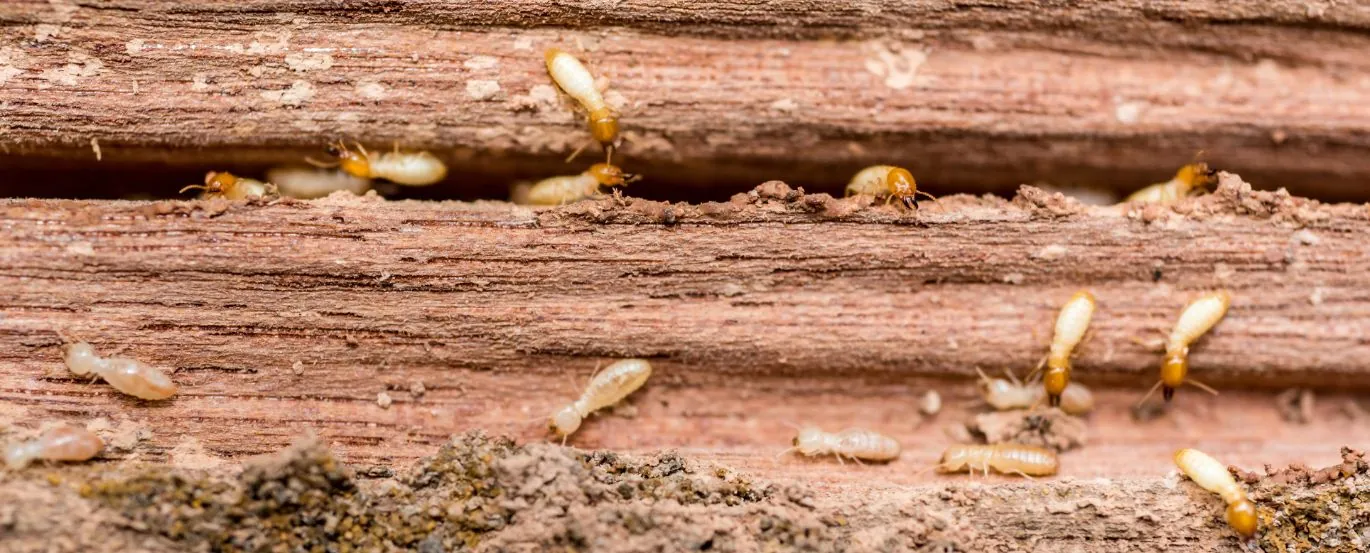
Termites
Termites cause more than $5 billion in property damage across the United States every year, and that damage is typically not covered by standard homeowners insurance. In southeastern North Carolina and northeastern South Carolina, the warm, humid climate and high water tables create conditions where subterranean termites thrive. Most homes in this region are at risk, and because termites work from the inside out, an infestation can go undetected for months or years before the damage becomes visible.
The good news is that termite damage is preventable. Regular inspections, professional treatment, and ongoing monitoring protect your home and catch problems before they become costly. McDuffie Pest Control has been treating and preventing termite infestations across this region since 1964, and we're a Certified Sentricon Specialist.
Understanding Subterranean Termites
The subterranean termite is the most destructive species in the United States and the primary species found in the Carolinas. A colony can contain hundreds of thousands to millions of individuals organized into three castes.
Workers
Small, pale, soft-bodied insects about 1/4 inch long. Workers are the ones that actually consume wood and cause damage. They feed 24 hours a day, seven days a week, and are rarely seen because they avoid light.
Soldiers
Similar in size to workers but with larger, darker heads and prominent mandibles. Soldiers defend the colony against threats, particularly ants. Like workers, they're pale and avoid light.
Swarmers (Reproductives)
Dark-bodied, winged termites about 3/8 inch long. Swarmers emerge from mature colonies in spring (typically March through June in the Carolinas) to mate and establish new colonies. Seeing swarmers or their discarded wings is one of the most common ways homeowners discover a termite problem.

Signs of a Termite Infestation
Termites work out of sight, but they leave several telltale indicators. If you notice any of these, contact us immediately — early detection makes treatment more effective and limits the extent of the damage.
- Mud tubes — Pencil-width tubes of soil and debris running along foundation walls, floor joists, and other surfaces. These are the highway system subterranean termites use to travel between the colony and their food source.
- Swarmers or discarded wings — Finding winged termites inside your home, or piles of small translucent wings on windowsills or near light fixtures, is a strong sign of a nearby active colony.
- Hollow sounding wood — Tap suspect wood with a screwdriver. If it sounds hollow or the tool pushes through easily, termites may be the cause. Damaged wood often has a layered or honeycomb pattern inside.
- Bubbling or blistering paint — Moisture buildup behind paint caused by termite activity can produce blistering that resembles water damage, most common near baseboards and window frames.
- Soft spots in flooring — Sagging or soft areas in hardwood or laminate flooring can indicate termite damage to the subfloor or floor joists beneath.
How McDuffie Treats Termites
We offer two proven treatment approaches. As a Certified Sentricon Specialist, we're trained in the industry's leading baiting technology.
Sentricon System: Bait stations are placed around the perimeter of your home. Termite workers feed on the bait and carry it back to the colony, where it disrupts the molting process and eliminates the population — including the queen. Stations remain in place permanently, providing continuous monitoring and protection.
Liquid Treatment: A non-repellent termiticide is applied to the soil around the foundation, creating a continuous treated zone. Termites pass through the treated soil, pick up the product, and transfer it to other colony members through contact and grooming behavior.
Both methods are effective. We'll recommend the best option for your property after a thorough inspection. Visit our termite control services page for a detailed comparison.
Termite Prevention Tips
Eliminate wood-to-soil contact. Keep siding, door frames, and deck posts from making direct contact with the ground. Use concrete or metal supports where wood meets soil.
Address moisture issues. Fix leaking faucets, ensure gutters direct water away from the foundation, and maintain proper crawl space moisture levels. Subterranean termites are moisture-dependent.
Store firewood and lumber away from the house. Keep firewood at least 20 feet from the foundation and elevated off the ground.
Remove dead wood and tree stumps. These provide a food source that can sustain a colony near your home.
Schedule annual inspections. Many termite infestations are caught during routine inspections before they cause significant damage. Don't wait for visible signs.
For properties with crawl spaces, pairing termite protection with our moisture and crawl space services provides even stronger defense.
Protect Your Home from Termites
Whether you've seen signs of termite activity, you're buying or selling a home, or you simply want to make sure your home is protected, contact McDuffie Pest Control to schedule. We'll give you an honest assessment of your property and a clear recommendation for protection.
Visit our termite control services page for full information on treatment options, the Sentricon system, annual renewal plans, and WDIR inspections.
Get in Touch Today
Frequently Asked Questions
Does homeowners insurance cover termite damage?
In most cases, no. Standard homeowners insurance policies do not cover termite damage because it's considered a preventable maintenance issue. This is one of the key reasons ongoing termite protection is so important. The cost of an annual renewal plan is a fraction of what you'd spend on structural repairs from an undetected infestation.
How do I know if I have flying ants or termite swarmers?
Three key differences: termites have straight, bead-like antennae while ants have elbowed antennae; termites have a thick, straight waist while ants have a narrow, pinched waist; and termite wings are all the same length and shed easily while ant front wings are noticeably longer than the rear wings. If you're finding winged insects or shed wings indoors in spring, especially near windows or lights, contact us and we can confirm the species.
When is termite season?
Subterranean termite swarmers emerge primarily from March through June in the Carolinas, with peak activity in April and May. However, the worker termites that cause damage are active year-round, feeding 24 hours a day. Swarmer season is when most people discover they have a termite problem, but the colony has usually been active long before the swarmers appear.
How often should I have my home inspected for termites?
At minimum, an annual inspection is recommended. Homes with active termite protection (Sentricon or liquid treatment) should maintain their annual renewal inspection to verify the system is functioning properly. Homes without protection should be inspected annually to catch any new activity early.