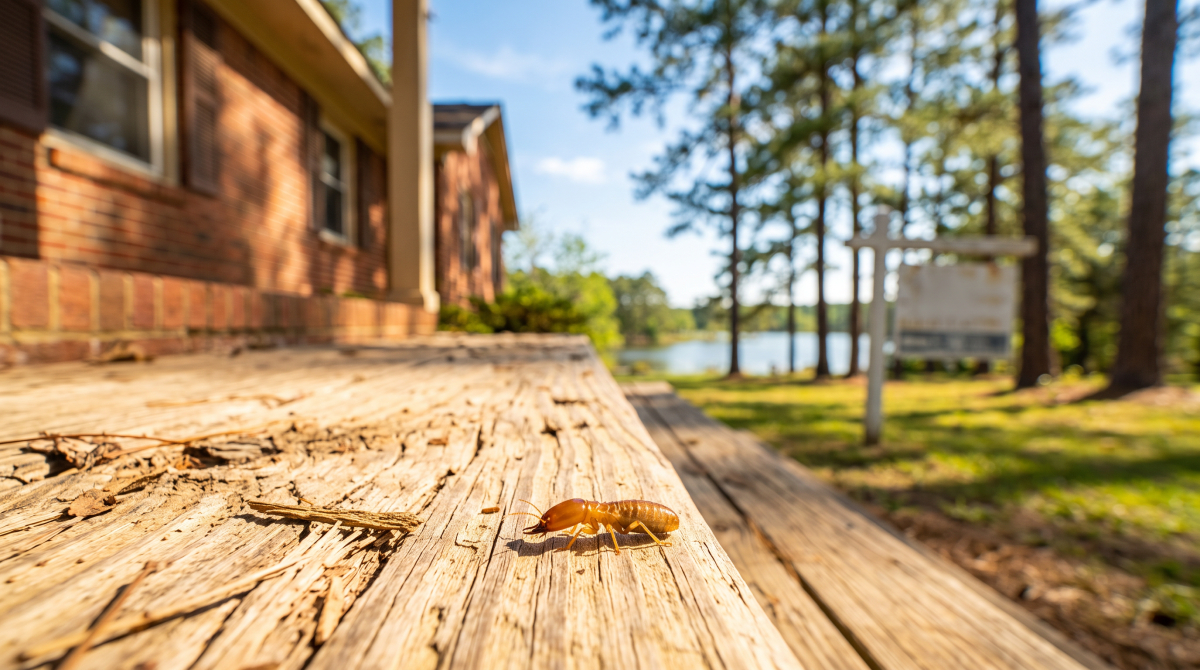
Walter McDuffie started our company in Elizabethtown in 1964, and we've been serving families in southeastern North Carolina ever since. Today that work includes the WDIR, the official report North Carolina uses for wood-destroying insects when a home is sold. If you need a WDIR in Bladen County, NC or a report anywhere in Columbus County, you're working with a family business that has been around for more than 60 years. Here's what the report is, what it means for the older homes so common in our area and how to plan for it.
Whether you're selling a family home in Whiteville, buying a lake house near Lake Waccamaw or closing on a farmhouse outside Chadbourn, the steps are the same. The details of each house are what make every report different.
The WDIR in Bladen County, NC and Columbus County
In our state, the Department of Agriculture and Consumer Services (NCDA&CS) writes the rules for this report. The state calls it the Official NC Wood-Destroying Insect Information Report, or simply Form WDIR 100. State rule 02 NCAC 34 .0602, quoted in a Spring 2026 NCDA&CS bulletin, makes it the only form allowed when a licensee puts findings on wood-destroying insects in writing for a house that's for sale.
A Report, Not a Clearance
Plenty of people still call it a "termite letter." The NCDA&CS homebuyer's guide to the WDIR explains why that name doesn't fit. The report covers more than termites, and it doesn't "clear" a house. It's a record of the visible presence or absence of wood-destroying insects on the day of the inspection, and it isn't a warranty.
When You'll Need One
The state's own brochure says this report is needed on nearly every residential sale in North Carolina. A lender or buyer may ask for it, and your agent or closing attorney will tell you the deadline. So when someone asks about a termite inspection for a home sale in Whiteville or Elizabethtown, this is the report they mean.
Why Older Homes Need a Careful WDI Inspection
Many houses in our two home counties have stood for decades. Our Chadbourn page talks about the older housing stock there, and the same is true in many Elizabethtown and Whiteville neighborhoods. Crawl spaces, wood porches and additions built in different years all give insects more places to hide.
Why a "Clean" Report Isn't the Goal
Here's a point worth knowing before you list. An NCDA&CS memo to homeowners, Realtors and lenders says most North Carolina homes older than 10 to 15 years will have some evidence of wood-destroying insects. It also says a so-called "clear" report isn't mandatory for a sale to go through. The goal is an honest report, and an honest report on an older home will often note old activity.
Old Evidence Versus Active Insects
The form separates live insects from past activity and from evidence that was treated before. If old termite tubes sit next to signs of an earlier treatment, the inspector notes that too. Knowing this ahead of time helps buyers and sellers in Bladen and Columbus Counties read a report calmly instead of assuming the worst.
What Our Inspector Checks
By state definition, a WDIR inspection is a careful visual look at all accessible areas, plus sounding, or tapping, accessible wood framing to check for hollow spots. In a typical home here, that means:
- The crawl space: sills, joists, piers and any debris left under the house.
- Attached porches and decks: these count as part of the home. Detached barns, sheds and outbuildings are only checked if you ask.
- The attic, interior and exterior: wherever the inspector can safely reach.
- Anything we can't reach: stored items or blocked access points get listed as inaccessible on the form.
The inspector must also write down anything that invites subterranean termites. The state's floor is three items: wood resting on dirt, scraps of wood or paper left beneath the home, and framing that reads 20% moisture or higher on a moisture meter.
What Falls Outside the Report
NCDA&CS says the WDIR won't report wood rot or wildlife. It also isn't a damage estimate. If insects have reached the wood, the state says to assume some damage and have a contractor or structural engineer look at it.
Lake Homes and Farm Country
Our service area has its own kind of houses. Lake Waccamaw State Park, in Columbus County, sits on the shores of the largest Carolina bay, according to NC State Parks. Near Elizabethtown, Jones Lake State Park protects two more of these bays in Bladen County. Elizabethtown itself sits along the Cape Fear River, in low-lying land that holds moisture.
That matters on a WDIR, because crawl space wood at 20% moisture or more is a condition every inspector must report.
Rural properties bring their own questions. A farmhouse near Chadbourn might have a detached shop or barn, and you'll want to say up front whether those buildings should be included. If a report notes moisture, we offer crawl space moisture solutions that help keep the wood dry.
Neighbors Serving Neighbors
Our home office is at 2904 E Broad St in Elizabethtown, and our Elizabethtown page explains why that location gives local customers fast scheduling. Walter McDuffie earned his entomology degree at NC State, and the company's first part-time employee is still on our team today. Today's crew includes Certified Sentricon Specialists and an Associate Certified Entomologist. You can read more about the report on our WDIR service page or see our Whiteville page for local service.
Here's how a WDI report with us usually goes:
- Call with your closing date. We'll set a time that fits the contract.
- Clear the way. Make sure the crawl space door, attic hatch and porch areas are reachable.
- We inspect and write the WDIR 100. Every finding gets a specific location, not just "in crawl space," as the Division's WDIR 100 enforcement policy requires.
- We talk it through. If something turns up, we explain your options plainly. Treatment is a separate choice for the buyer and seller.
Frequently Asked Questions
My house is 50 years old. Should I expect bad news on the WDIR?
Not necessarily bad news, but expect an honest report. The state says most older NC homes show some evidence of wood-destroying insects. Past activity that was treated is very different from an active problem, and the form shows the difference.
Does the report include my detached barn or workshop?
Not by default. The state's guidance leaves detached buildings off unless the client asks for them. Tell us when you schedule so we can plan the visit.
Is a WDIR the same as a home inspection?
No. NCDA&CS says structural and electrical defects, plumbing and roof leaks fall outside the WDIR, except where a leak creates conditions for termites. A licensed home inspector or contractor handles those. Your agent can tell you which inspections your contract calls for.
What happens if termites are found and the house was never treated?
The report notes the finding and its location. Buyer and seller then decide on treatment. If a treatment is done along with the WDIR, NCDA&CS guidance says a copy of the treatment agreement must be attached. Our termite services page covers liquid and Sentricon options.
How do I know a WDIR is legitimate?
Check the form for the company's name and a license number carrying a W phase, which a Spring 2026 NCDA&CS bulletin says must appear. If anything looks off, the state's structural section takes calls at 984-236-4625.
Schedule Your WDIR with McDuffie
From Elizabethtown and White Lake to Whiteville, Chadbourn and Lake Waccamaw, McDuffie has been family-owned in Elizabethtown since 1964. When your closing depends on an accurate report, it helps to work with a local, family-owned team that knows these houses.
Contact us about a wood destroying insect report in Bladen County or Columbus County, or call our Elizabethtown office at (910) 862-3635.