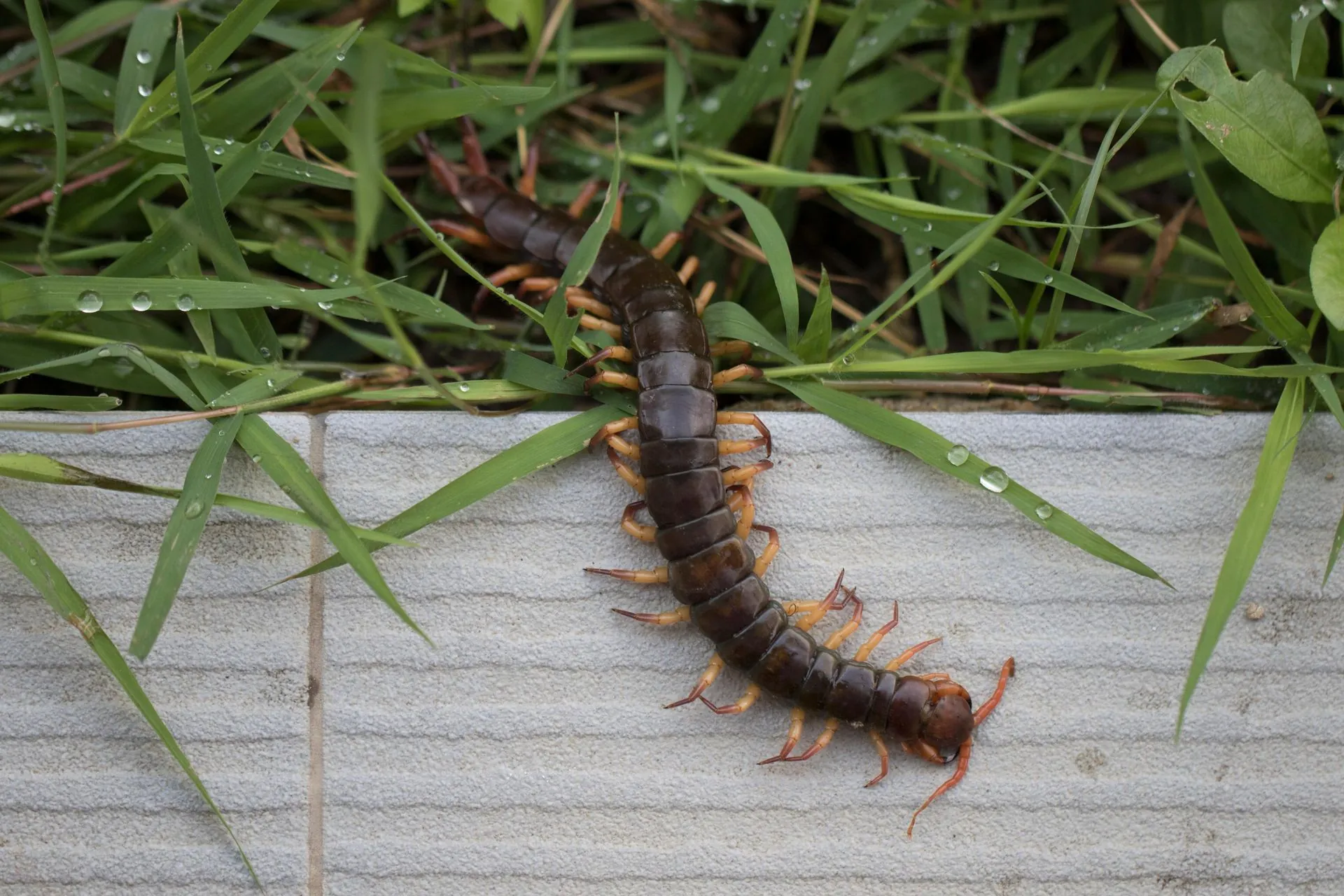
Centipedes & Millipedes
Centipedes and millipedes are two of the most common crawl space and bathroom invaders in southeastern North Carolina and northeastern South Carolina. They look similar at a glance, but they're actually quite different in behavior and risk. What they have in common is more important than what separates them: both are moisture-dependent pests, and their presence indoors is almost always a sign that your home has a humidity or moisture problem worth addressing.
If you're finding centipedes or millipedes inside your home regularly, the pests themselves are the symptom. The underlying issue is usually excess moisture in the crawl space, bathroom, or foundation area.
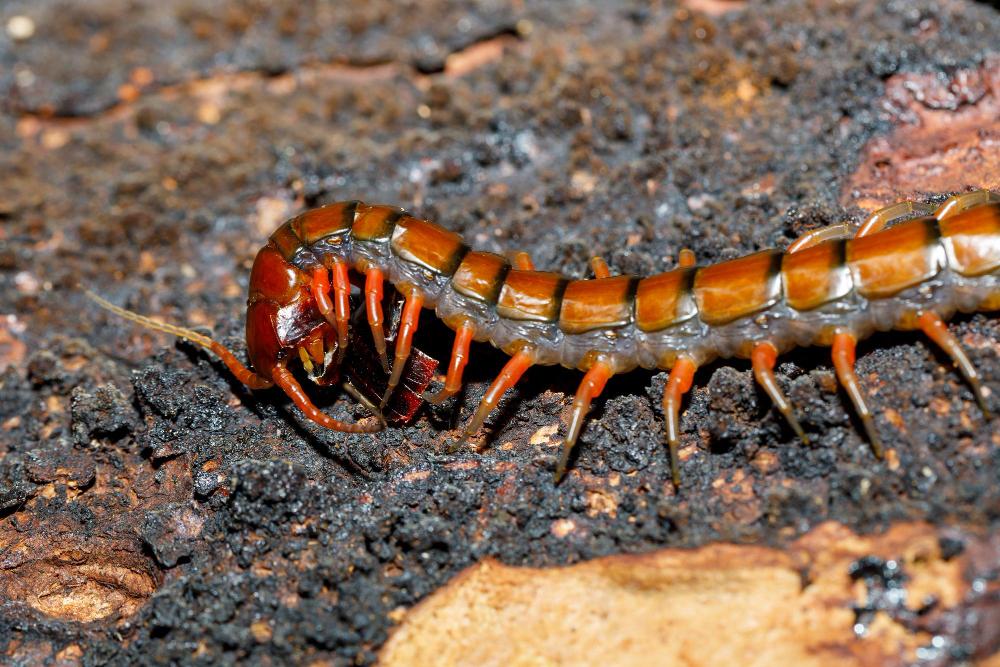
Centipedes vs. Millipedes
These two pests are often grouped together, but they behave differently and pose different concerns. Here's how to tell them apart.
| Feature | Centipedes | Millipedes |
|---|---|---|
| Body shape | Flat, with legs extending outward | Round/cylindrical, worm-like |
| Legs | One pair per body segment; long, visible legs | Two pairs per body segment; short legs tucked under body |
| Movement | Fast, darting runners | Slow, deliberate crawlers |
| Diet | Predators that feed on insects and spiders | Scavengers that feed on decaying plant material |
| Bite risk | Can bite (rare, mild, similar to a bee sting) | Do not bite; may curl into a coil when disturbed |
| Indoor behavior | Hunt other pests inside the home | Wander indoors seeking moisture; don't survive long |

Signs of a Problem
Both pests are drawn to moisture, and their presence is often a signal of an underlying humidity issue that's worth addressing.
- Frequent sightings in bathrooms, kitchens, or crawl spaces — Both pests are drawn to the most humid areas of your home. Regular sightings point to a moisture issue.
- Large numbers of millipedes near the foundation — During fall migration or after heavy rain, millipedes may cluster around exterior walls, garage doors, and entry points by the dozens or hundreds.
- Centipedes in multiple rooms — If centipedes are showing up beyond the bathroom, the population (and the prey they're feeding on) is likely well-established.
- Musty or damp conditions in the crawl space — If your crawl space smells damp or shows signs of standing water or fungal growth, the conditions that attract these pests are present.
Addressing the moisture source solves two problems at once — it eliminates conditions attracting these pests and protects your home from the more serious damage excess moisture causes over time. Visit our moisture and crawl space services page to learn more.
How McDuffie Treats the Problem
Our approach addresses both the pests and the conditions driving their activity.
Inspection: We assess your home's interior and exterior for moisture conditions, entry points, and harborage areas. For centipedes, we also look for the prey populations that are sustaining them.
Targeted treatment: We treat entry points, foundation perimeters, and interior harborage areas to reduce the active population.
Moisture recommendations: If crawl space or foundation moisture is contributing to the problem, we'll recommend the appropriate moisture control measures — vapor barriers, encapsulation, or dehumidification.
Exclusion: Sealing gaps and cracks around the foundation, doors, windows, and utility penetrations reduces entry points for both pests.
Our quarterly and tri-annual service plans include perimeter treatments that help keep centipedes, millipedes, and other crawling pests from entering between visits.
Prevention Tips
Reduce moisture around your home. Fix leaky faucets, ensure gutters drain away from the foundation, and address standing water near the house. Moisture is the primary driver for both pests.
Manage your crawl space. Proper ventilation, vapor barriers, or full encapsulation keep humidity levels in check and make the space inhospitable to moisture-dependent pests.
Remove organic debris near the foundation. Leaf piles, mulch buildup, stacked firewood, and ground cover against the house create ideal millipede habitat. Keep a clear gap between landscaping and the structure.
Seal entry points. Caulk gaps around doors, windows, utility lines, and foundation cracks. Both pests enter through small openings at ground level.
Reduce outdoor lighting near doors. Centipedes follow their prey, and many insects are attracted to lights. Switching to yellow or sodium vapor bulbs near entry points can help.
Schedule a Free Estimate
If centipedes or millipedes are showing up regularly inside your home, it's worth finding out why. McDuffie Pest Control will identify what's driving the activity and recommend a plan that addresses both the pests and the conditions attracting them.
Contact us today to learn more.
Get in TouchFrequently Asked Questions
Are centipedes dangerous?
House centipedes can bite, but it's rare and typically only happens if they're handled or trapped. The bite is mild, similar to a minor bee sting, and isn't considered medically significant for most people. Centipedes are actually beneficial predators that feed on other household pests, but their presence in large numbers usually indicates underlying moisture and pest issues worth addressing.
Why am I suddenly seeing so many millipedes?
Millipede migrations are typically triggered by heavy rain or seasonal changes. When outdoor conditions become too wet or too dry, millipedes move toward homes in large numbers seeking moisture and shelter. This is especially common in fall across southeastern North Carolina. The influx is usually temporary, but if millipedes are getting inside, entry points and moisture conditions near your foundation need attention.
Do centipedes mean I have other pests?
Often, yes. Centipedes are predators, and they go where the food is. A consistent centipede population indoors suggests there are enough spiders, ants, cockroaches, or other small pests in your home to sustain them. Treating the centipedes without addressing the prey population and moisture conditions typically leads to the problem returning.
Will fixing my crawl space moisture solve the problem?
Addressing crawl space moisture is one of the most effective long-term solutions for centipede and millipede issues. Both pests depend on humidity, and reducing moisture levels in the crawl space makes your home far less attractive to them. Combined with perimeter treatment and entry point sealing, moisture control typically resolves the problem at its source. Visit our moisture and crawl space services page for more information.