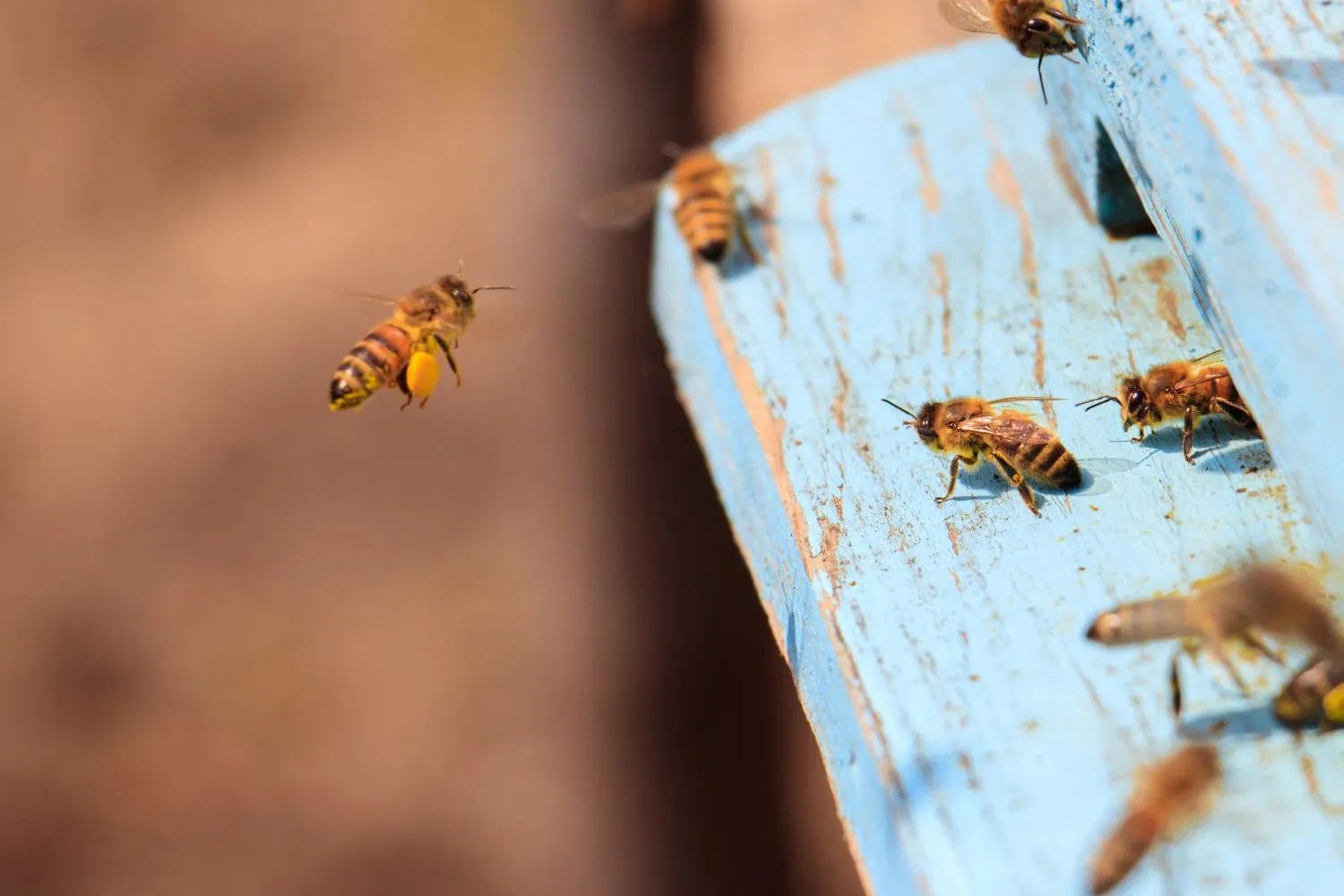
Stinging Insects
Stinging insects are a fact of life in southeastern North Carolina and northeastern South Carolina. Wasps, hornets, yellow jackets, and carpenter bees are all common throughout the region. While most play beneficial roles as pollinators and predators of other pests, they become a serious concern when they build nests on or near your home. For anyone with a sting allergy, a nest near a doorway, deck, or play area is a genuine safety hazard.
Knowing which species you're dealing with helps determine the level of risk and the best approach to removal.
Common Stinging Insects in the Carolinas
Each species nests differently and presents a different level of risk. Identification is the first step toward safe removal.
Paper Wasps
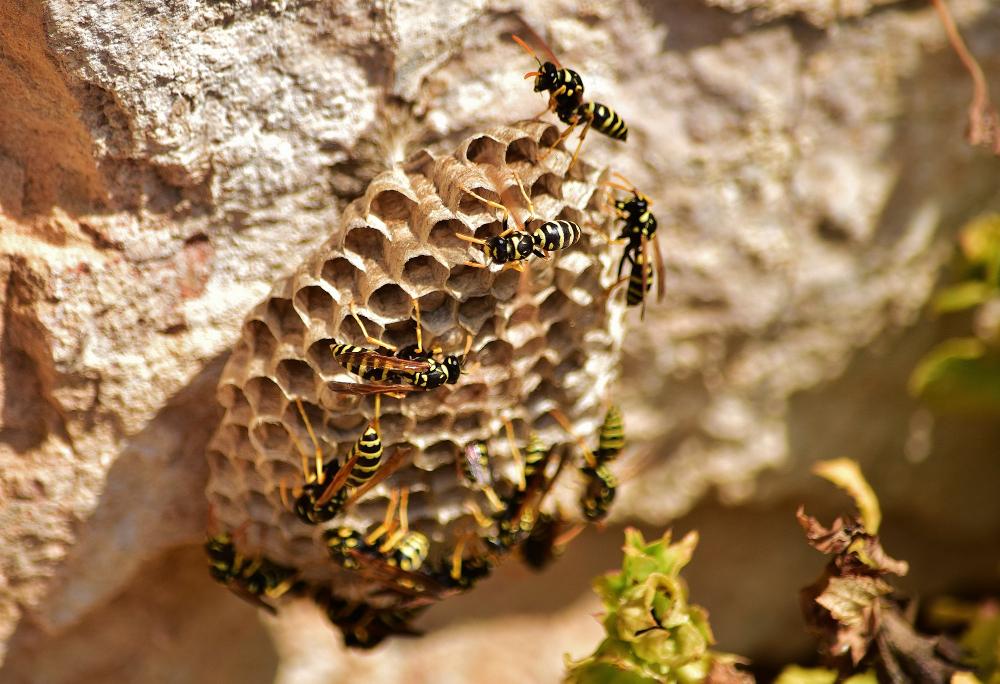
Slender, brownish with yellow or reddish markings, about 3/4 to 1 inch long. They build small, open, umbrella-shaped nests under eaves, porch ceilings, deck railings, and behind shutters. Generally not aggressive unless their nest is directly disturbed, but their nests are often built in high-traffic areas where accidental contact is likely.
Yellow Jackets
About 1/2 inch long, black and yellow with a defined waist. The most aggressive common stinging insect in this region. They build enclosed nests, often underground in old rodent burrows, and also in wall voids and hollow trees. Attracted to sweet foods and protein — which is why they show up at outdoor cookouts. They sting repeatedly and swarm when the nest is threatened.
Bald-Faced Hornets
Large (about 3/4 inch), black and white. They build large, enclosed, football-shaped paper nests in trees, shrubs, and on building exteriors. Aggressive defenders of their nests that can sting multiple times. Nest removal should always be handled by a professional.
Carpenter Bees
Large (about 1 inch), shiny black abdomen. Often confused with bumblebees, which have a fuzzy abdomen. Carpenter bees bore perfectly round, half-inch-diameter holes into untreated or weathered wood. Males hover aggressively but can't sting. Females can sting but rarely do. The primary concern is structural damage over time as multiple generations reuse and expand the same galleries.
Mud Daubers
Slender, usually black or metallic blue, about 1 inch long. They build small tube-shaped mud nests under eaves, in garages, and on exterior walls. Mud daubers are solitary and non-aggressive — they rarely sting and are actually beneficial because they prey on spiders, including black widows. Nests can be removed without significant risk.
Sting Risks and Allergic Reactions
For most people, a sting causes immediate sharp pain followed by redness, swelling, and itching that resolves within a few days. Allergic reactions are the primary medical concern.
- Anaphylaxis symptoms — Difficulty breathing, swelling of the face or throat, rapid heartbeat, dizziness, hives, and a drop in blood pressure. Anaphylaxis is a medical emergency. If anyone in your household has a known insect sting allergy, nests near the home should be treated as an urgent priority.
- Multiple stings — Even without an allergy, multiple stings from a yellow jacket or hornet swarm can cause a significant systemic reaction in anyone.
- Children and pets — At increased risk because they may inadvertently disturb a ground-level nest during play.
- Don't attempt to remove large nests yourself — Yellow jacket, hornet, and large wasp nests should always be handled by a professional. Disturbing these nests can trigger an aggressive defensive swarm.
How McDuffie Treats Stinging Insects
We identify the species and locate the nest. This determines the treatment approach, since a paper wasp nest under an eave requires a different strategy than a yellow jacket colony underground or in a wall void.
We treat the nest to eliminate the colony, then remove the nest structure when accessible. For ground nests and wall void nests, treatment focuses on eliminating the colony in place.
For carpenter bees, we treat active boring holes and gallery entrances to eliminate adults and larvae. We'll recommend sealing the holes after treatment and painting or staining exposed wood to deter future boring.
Our quarterly and tri-annual service plans include treatment of eaves, soffits, and other common nest-building locations to deter wasps and hornets from establishing nests on your home.
Prevention Tips
Inspect your home's exterior in early spring. Queen wasps and hornets start building nests in spring when colonies are small and easier to manage. Check eaves, soffits, shutters, deck undersides, and porch ceilings.
Seal openings in the home's exterior. Gaps in siding, uncapped vents, and openings around utility penetrations can allow yellow jackets and wasps to build nests inside wall voids and attic spaces.
Manage food and trash outdoors. Keep garbage can lids tight, clean up after outdoor meals promptly, and cover drinks when eating outside. Yellow jackets are especially drawn to food sources in late summer.
Paint or stain exposed wood. Carpenter bees prefer untreated, weathered wood. Painting or staining fascia boards, deck railings, trim, and porch ceilings makes the wood less attractive for boring.
Schedule Stinging Insect Removal
If you've found a nest on your property or carpenter bees are damaging your home's woodwork, contact McDuffie Pest Control to schedule removal. We'll identify the species, treat the nest safely, and recommend steps to prevent future activity.
Schedule Removal
Frequently Asked Questions
What's the difference between a wasp and a bee?
Wasps (including yellow jackets and hornets) have smooth, slender bodies with a narrow waist and can sting repeatedly. Bees have rounder, fuzzier bodies and generally die after a single sting (with the exception of carpenter bees and bumblebees). Wasps are predators and scavengers, while bees feed primarily on nectar and pollen. Both are beneficial in the right context, but wasps are typically more aggressive when their nest is threatened.
Are carpenter bees destroying my house?
Carpenter bees cause cosmetic and structural damage to wood over time. A single pair of holes may not be cause for alarm, but carpenter bees tend to return to the same wood year after year, with each generation expanding existing galleries and boring new ones. Over several seasons, this can weaken fascia boards, railings, and structural trim. Woodpecker damage often follows, since woodpeckers feed on carpenter bee larvae inside the galleries.
When should I call a professional for a nest?
Any nest you can't safely reach, any nest in a wall void or underground, and any nest belonging to yellow jackets or bald-faced hornets should be handled professionally. These species are aggressive defenders and swarm when threatened. If you're allergic to stings, call a professional for any nest, regardless of species or size.
Do you remove honeybee hives?
McDuffie Pest Control does not provide honey bee removal services. If you have a honeybee colony on your property, contact us to discuss the situation and we can refer you to the appropriate individuals to help with this scenario.