Flies
Flies are one of the most common household pests, and in the warm, humid climate of southeastern North Carolina and northeastern South Carolina, they're active for much of the year. While most people think of flies as a minor annoyance, they're actually a legitimate health concern. Flies land on decaying organic matter, garbage, and animal waste, then transfer the bacteria they pick up to your food, countertops, and other surfaces. They're linked to the transmission of diseases including Salmonella, E. coli, and cholera.
A few flies finding their way inside is normal. A persistent or growing fly problem indoors usually points to a breeding source nearby that needs to be identified and eliminated.

Common Fly Species in the Carolinas
The species you're dealing with indicates the breeding source — which is the key to effective fly control.
House Flies
Gray with four dark stripes on the thorax, about 1/4 inch long. They don't bite but contaminate surfaces by landing on food and regurgitating digestive fluids before feeding. They breed in decaying organic material including garbage, compost, pet waste, and grass clippings.
Fruit Flies
Tiny (about 1/8 inch), tan or brownish with distinctive red eyes. Attracted to ripe and fermenting fruit, vegetables, vinegar, and sugary organic material. They breed rapidly — a single piece of overripe fruit can produce dozens of flies within days.
Drain Flies (Moth Flies)
Small, fuzzy, moth-like flies found near drains, shower stalls, and areas with standing water. They breed in the organic film that builds up inside drains and pipes — a sign of plumbing maintenance needs rather than a sanitation issue.
Blow Flies / Bottle Flies
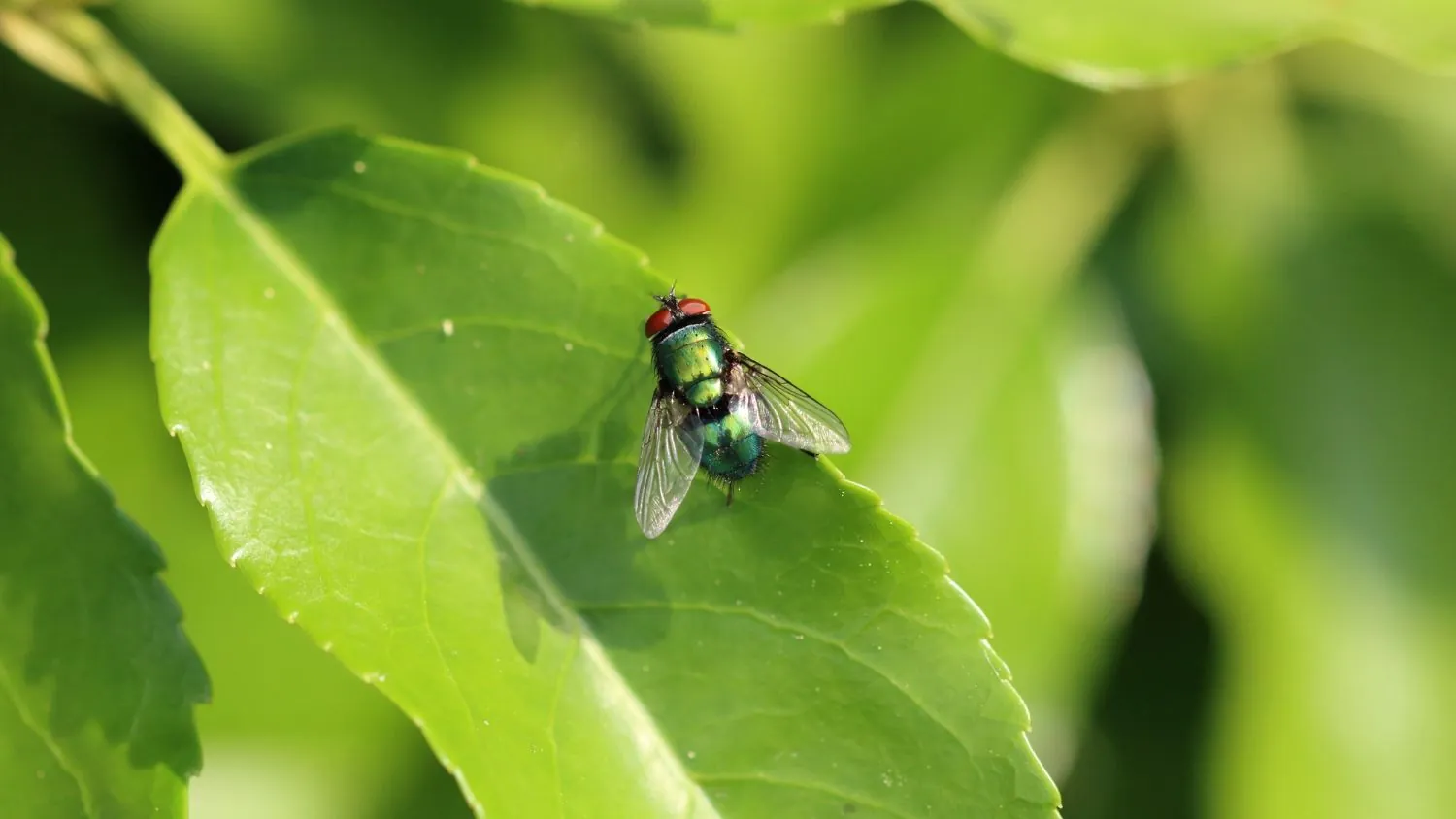
Larger than house flies, metallic blue or green, and noticeably loud. Strongly attracted to decaying animal matter. Finding blow flies indoors, especially in winter, can indicate a dead animal in a wall void, attic, or crawl space.

Signs of a Fly Problem
The key to effective fly control is identifying and eliminating the breeding source. Killing adult flies without addressing where they're reproducing only provides temporary relief.
- Persistent indoor presence — Flies consistently appearing in the kitchen, bathroom, or other rooms suggest a breeding source nearby rather than random entry from outside.
- Maggots — Finding small, white, legless larvae in garbage cans, around pet waste, or near drains means flies are actively breeding on your property.
- Clusters near windows — Flies gathering on interior window glass are often trying to reach light, which can indicate they're breeding somewhere inside the home.
- Foul odors from drains — A musty or sewage smell from drains combined with small moth-like flies points to drain fly breeding in organic buildup.
- Metallic flies indoors in cooler months — Blue or green blow flies inside during fall or winter often indicate a dead animal hidden in a wall void, attic, or crawl space.
How McDuffie Treats Fly Problems
The key to effective fly control is identifying and eliminating the breeding source. Killing adult flies without addressing where they're reproducing only provides temporary relief.
We identify the species and locate the breeding source — whether that's an exterior garbage area, an interior drain, a crawl space issue, or a dead animal in a wall void. Treatment focuses on the breeding site first, then targeted treatment of resting areas and entry points to reduce the adult population.
For restaurants, food service facilities, and commercial accounts, McDuffie Pest Control installs and services FlyWeb fly lights, which use UV light to attract and trap flies in food preparation and service areas. Our commercial pest control programs include regular fly monitoring as part of facility-specific IPM plans.
Fly Prevention Tips
Manage garbage properly. Use trash cans with tight-fitting lids, take trash out regularly, and keep exterior garbage areas clean. Rinse recycling containers before storing them.
Clean up pet waste promptly. Pet waste in the yard is one of the most common fly breeding sites for residential properties.
Don't leave fruit and produce exposed. Store ripe fruit in the refrigerator and dispose of overripe produce promptly. Clean up spills and crumbs on countertops.
Maintain drains. Periodically clean kitchen and bathroom drains to remove the organic film that drain flies breed in. A stiff brush and enzymatic cleaner are more effective than chemical drain cleaners for this purpose.
Seal entry points. Repair torn window screens, check door sweeps, and ensure screen doors close properly.
Schedule a Free Estimate
If flies are a persistent problem in your home or business, contact McDuffie Pest Control to schedule a free estimate. We'll identify the species, find the breeding source, and recommend a plan to resolve the problem at its root.
Schedule a Free Estimate
Frequently Asked Questions
Why do I keep getting flies in my kitchen?
The most common culprits are exposed fruit, uncovered garbage, dirty drains, and crumbs or spills. Fruit flies in particular can breed from a single piece of overripe produce. If you've addressed all of these and flies persist, there may be a breeding source you haven't found — such as organic material under an appliance or in a drain trap. A professional inspection can identify hidden sources.
Are flies dangerous?
Flies carry bacteria on their bodies and legs, transferring pathogens to every surface they land on. House flies in particular are associated with the spread of Salmonella, E. coli, and other foodborne illnesses. A persistent fly population in a kitchen or food preparation area is a real health concern.
What does it mean if I'm seeing large, metallic-colored flies indoors?
Metallic blue or green flies are blow flies or bottle flies, and they're strongly attracted to decaying animal matter. Finding them indoors, especially during cooler months, often indicates a dead animal in a wall void, attic, or crawl space. A professional inspection can locate the source so it can be removed.
Do you provide fly control for restaurants and food service businesses?
Yes. Our commercial pest control programs include fly monitoring and control as part of facility-specific Integrated Pest Management plans. We install and service FlyWeb fly lights and provide documentation that meets USDA, FDA, and NCDA audit requirements. Contact us to discuss a program for your facility.