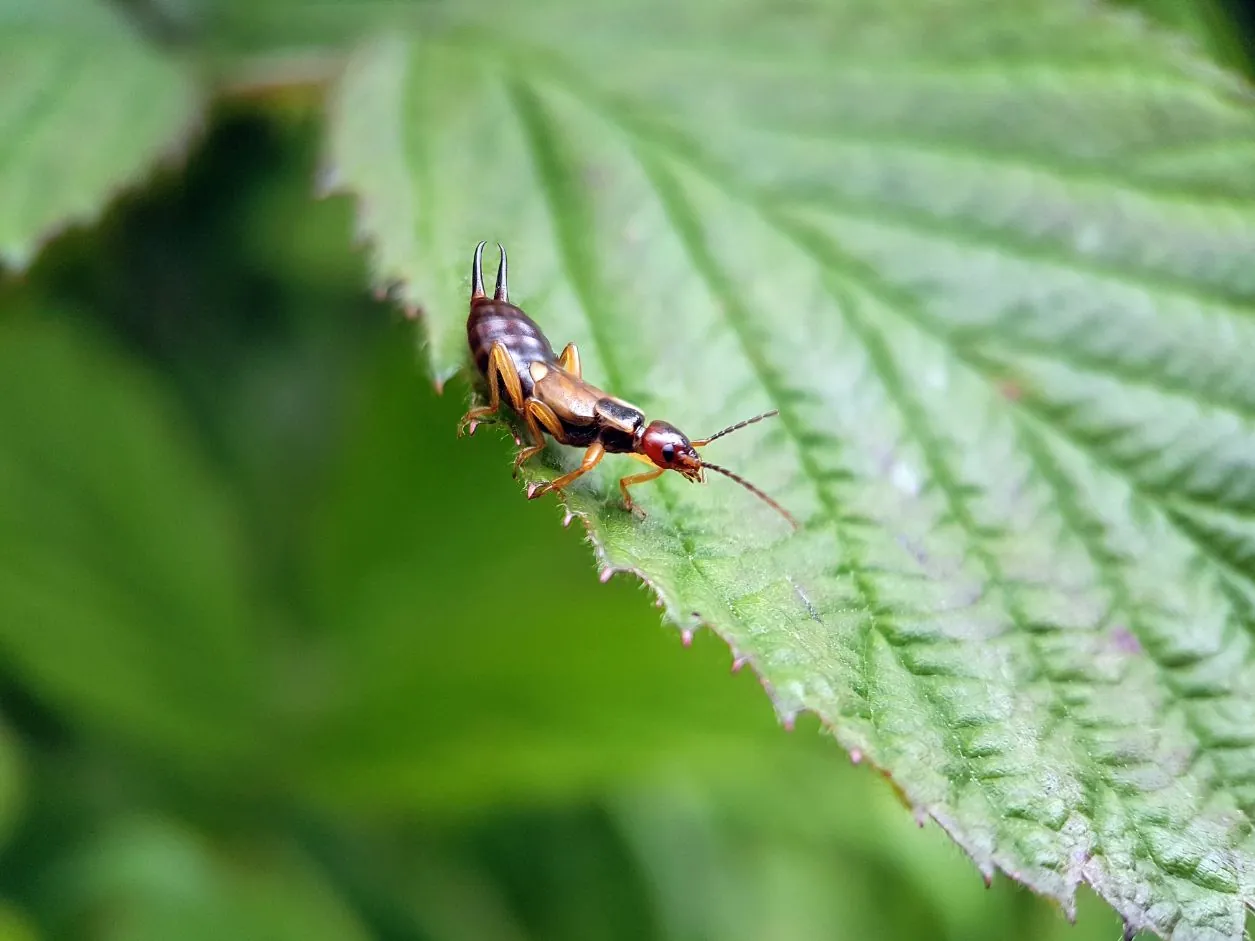
Earwigs
Earwigs are one of the most misunderstood pests homeowners encounter. With their prominent pincers and fast, darting movement, they look more threatening than they actually are. The old myth that earwigs crawl into human ears is just that — a myth rooted in European folklore with no basis in reality. In practice, earwigs are nocturnal, moisture-seeking insects that are far more interested in your garden, mulch beds, and damp crawl spaces than anything else.
Earwigs are common across southeastern North Carolina and northeastern South Carolina, particularly during the warmer months. They typically live outdoors in damp, sheltered areas but move inside when conditions become too hot, too dry, or too wet, entering through gaps and cracks at ground level.
Identifying Earwigs
Earwigs are easy to identify thanks to a few distinctive features that set them apart from other household insects.
Size and Color
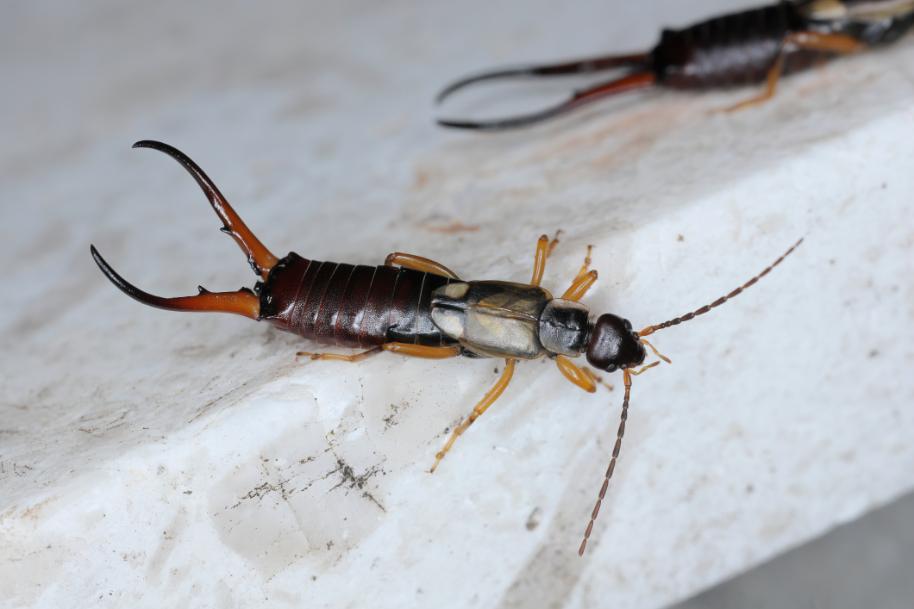
Elongated, flattened bodies ranging from about 1/4 inch to 1 inch long. Pale brown to reddish-brown or black, depending on the species. Long, threadlike antennae roughly half the length of the body.
The Pincers
The most recognizable feature — a pair of curved forceps-like pincers extending from the rear. Males typically have curved pincers, females have straighter ones. They can deliver a mild pinch if handled but are not strong enough to break skin or cause injury.
Wings
Most earwig species have wings folded beneath short, leathery wing covers, but they rarely fly. You're far more likely to see them running quickly across floors and surfaces than flying.
Signs of an Earwig Problem
- Sightings in damp indoor areas — Earwigs found in bathrooms, kitchens, laundry rooms, or basements are seeking moisture. Repeated sightings suggest they're entering from nearby harborage points.
- Garden and plant damage — Earwigs feed on soft plant tissue, leaving irregular holes and ragged edges on leaves, flower petals, and seedlings. They're particularly active in flower beds and vegetable gardens.
- Clusters under outdoor objects — Lifting mulch, landscape stones, potted plants, or garden debris and finding groups of earwigs indicates a healthy outdoor population near the foundation.
- Activity at night — Earwigs are nocturnal. Checking around exterior doors, windows, and foundation walls after dark with a flashlight may reveal them actively foraging.
Homes with damp crawl spaces, poor foundation drainage, or heavy mulch against the exterior walls tend to see more earwig activity because the outdoor habitat is already established close to the structure.
How McDuffie Treats Earwig Problems
We identify entry points and assess the outdoor harborage conditions near your home's foundation, including mulch beds, ground cover, and crawl space moisture levels.
We apply treatments to entry points, foundation perimeters, and key harborage areas to reduce the active population. Indoor treatments target the damp areas where earwigs are congregating.
If crawl space humidity or foundation drainage is contributing to the problem, we'll recommend appropriate moisture control measures. Sealing entry points at ground level is also a priority.
Earwig control is covered under our quarterly and tri-annual service plans, which include perimeter treatments to keep earwigs and other ground-level pests from entering between visits.
Earwig Prevention Tips
Reduce ground-level moisture and debris. Pull mulch back from the foundation, remove leaf piles, and clear ground cover that sits directly against the house. These are primary earwig harborage areas.
Seal entry points at ground level. Caulk gaps around doors, windows, utility lines, and foundation cracks. Check door sweeps and weatherstripping, especially on garage and exterior doors.
Address crawl space moisture. Proper ventilation, vapor barriers, or encapsulation reduce the damp conditions that attract earwigs and other moisture-dependent pests.
Move potted plants away from doorways. The saucers and soil in potted plants provide moisture and shelter that earwigs gravitate toward.
Switch exterior lighting. Like many nocturnal insects, earwigs are attracted to light. Yellow or sodium vapor bulbs near doors draw fewer insects to entry points.
Schedule a Free Estimate
If earwigs are showing up inside your home regularly, there's usually an access or moisture issue worth addressing. Contact McDuffie Pest Control to schedule a free estimate — we'll identify what's driving the activity and recommend a plan to resolve it.
Schedule a Free Estimate
Frequently Asked Questions
Do earwigs actually crawl into your ears?
No. This is a persistent myth with no basis in fact. Earwigs have no interest in human ears and don't seek them out. The name comes from old European folklore. While an earwig could theoretically wander into an ear the same way any small insect might, it's not a behavior associated with the species.
Are earwigs dangerous?
Earwigs are not dangerous. Their pincers can deliver a mild pinch if picked up or trapped, but they're not strong enough to break skin or cause meaningful pain. Earwigs don't carry diseases and are not venomous. They're primarily a nuisance pest, though they can cause damage to garden plants and seedlings.
Why do I keep finding earwigs in my bathroom?
Bathrooms provide the moisture that earwigs are seeking. Leaky faucets, dripping pipes, condensation, and poor ventilation all create conditions that attract them. They typically enter through gaps at ground level and make their way to the most humid areas of the home. Fixing moisture sources and sealing entry points are the most effective solutions.
Will earwigs damage my garden?
They can. Earwigs feed on soft plant tissue, including flower petals, seedlings, and leafy vegetables. Damage typically appears as irregular holes and ragged edges on leaves. In small numbers, the damage is minor. In larger populations, they can cause noticeable harm to flower beds and vegetable gardens, particularly to young plants.