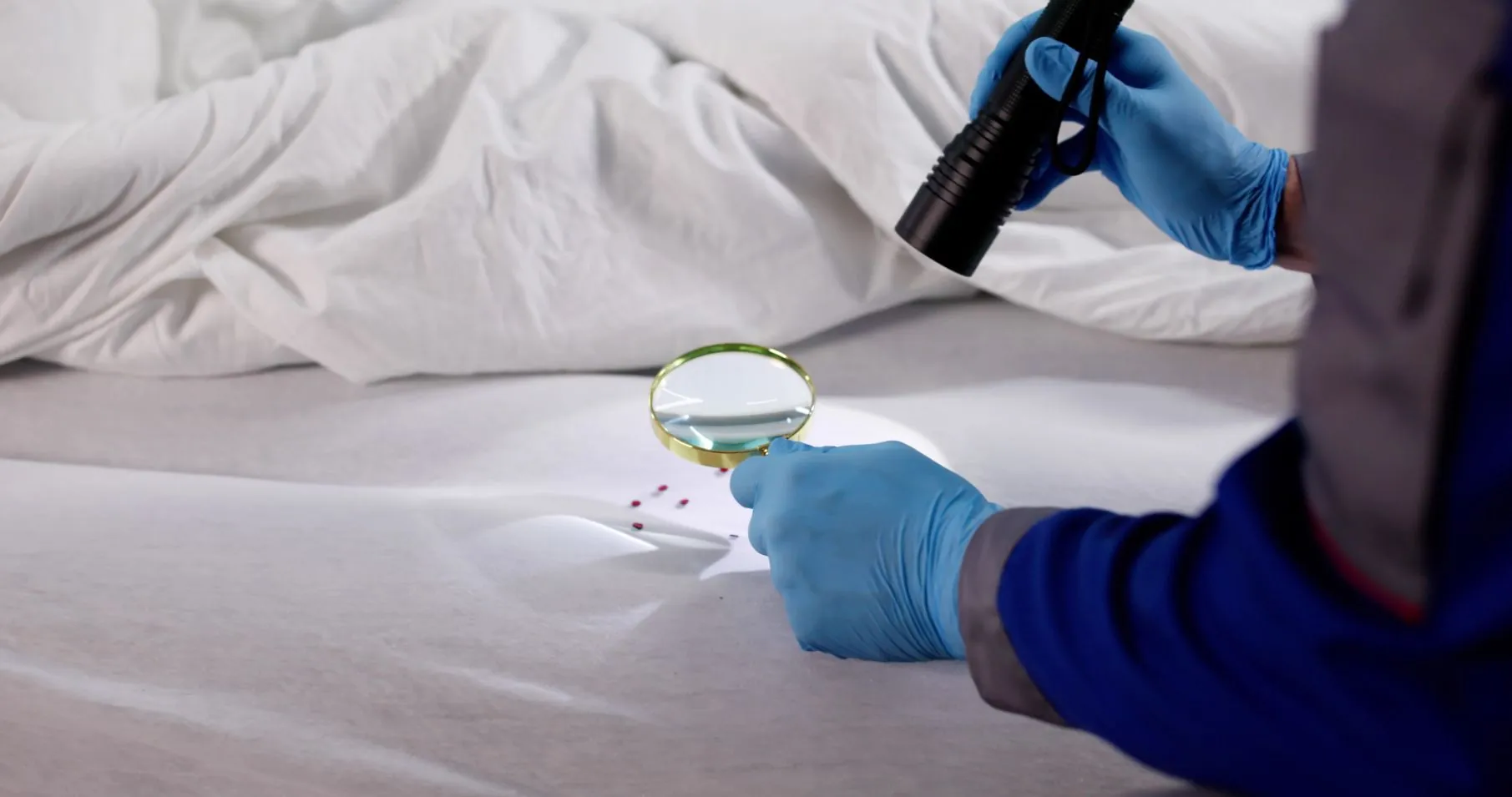
Bed Bugs
Bed bugs are one of the most stressful pest problems a homeowner can face. These small, parasitic insects feed on human blood, typically at night while you sleep, and they're notoriously difficult to eliminate without professional help. Bed bugs have nothing to do with cleanliness — they're hitchhikers that travel on luggage, clothing, used furniture, and personal belongings, and they can establish themselves in any home regardless of how well it's maintained.
If you're waking up with unexplained bites or noticing small reddish-brown spots on your bedding, bed bugs may be the cause. Early detection and professional treatment are the most effective way to resolve the problem before it spreads throughout your home.
Identifying Bed Bugs
Adult bed bugs are roughly the size of an apple seed — about 3/16 of an inch long — with flat, oval-shaped bodies. Before feeding, they're dark brown and very flat. After a blood meal, they become engorged and reddish. Here's what to look for and where to find them.
Adult Bed Bugs
About 3/16 of an inch, flat, oval, dark brown before feeding and reddish after. Six legs, antennae, and small wing pads on their backs — but they cannot fly. They hide in extremely narrow spaces during the day.
Eggs and Nymphs
Eggs are tiny, white, and roughly the size of a pinhead — often found in clusters in seams and crevices. Nymphs are smaller and lighter in color than adults, making them very difficult to spot with the naked eye.
Common Hiding Spots
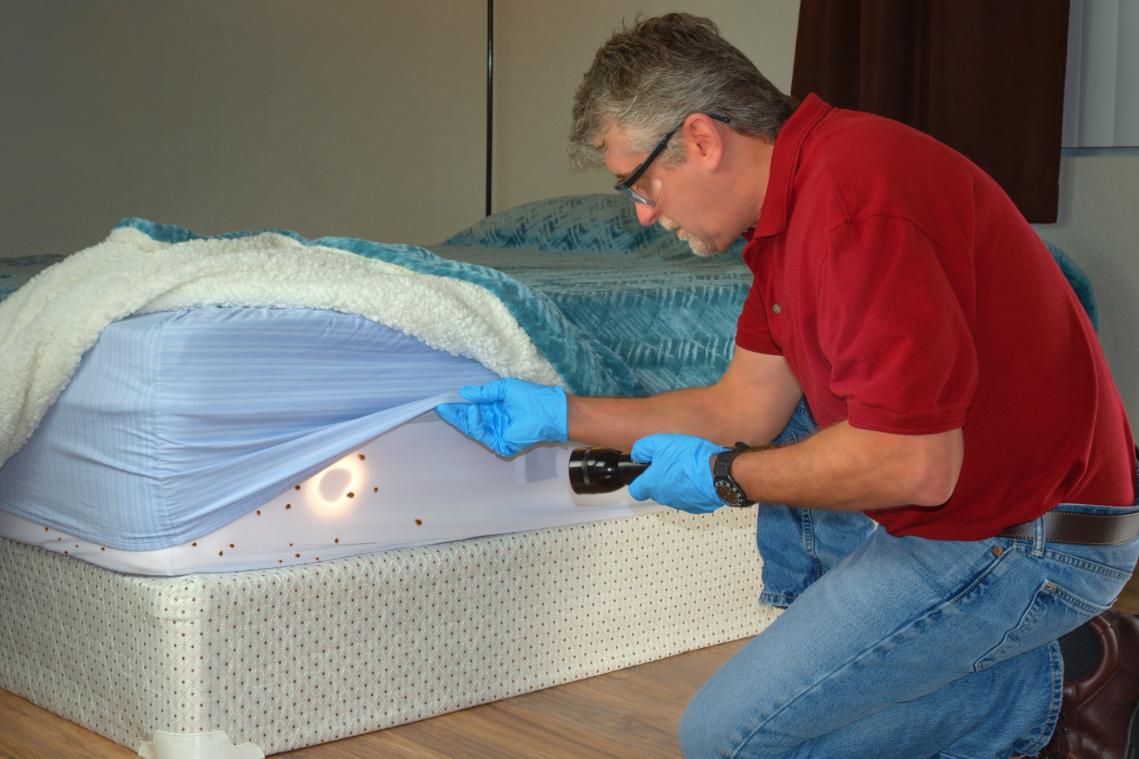
Mattress seams, box spring joints, headboard crevices, nightstand drawers, and baseboards near the bed. In heavier infestations, they spread to outlets, picture frames, curtain rods, and furniture joints further from the sleeping area.
Signs of a Bed Bug Infestation
Bed bugs are experts at hiding during the day, so you're more likely to notice the evidence they leave behind than the bugs themselves.
- Reddish-brown fecal spotting — Small dark spots on sheets, pillowcases, mattress seams, and upholstery. This is digested blood and is one of the most reliable indicators.
- Shed skins — As bed bugs grow through five nymph stages, they molt their exoskeletons. Finding translucent, empty shells near sleeping areas points to an active population.
- Eggs and egg casings — Tiny white eggs or empty casings clustered in seams and crevices near sleeping areas.
- Bites — Small red, itchy welts, often in clusters or lines on exposed skin. Reactions vary significantly — some people show no reaction at all. Bites alone don't confirm bed bugs.
- Musty odor — In heavier infestations, bed bugs release pheromones that produce a noticeable sweet, musty smell in the affected room.
If you're seeing any combination of these signs, get in touch with us today!. Confirming the presence of actual bed bugs or their eggs is the most important step before beginning treatment.
How Bed Bugs Spread
Bed bugs don't fly or jump — they crawl, and they're remarkably effective at hitching rides from one location to another. Common ways they enter a home include travel (luggage and clothing pick up bed bugs in hotels and rental properties), used furniture, public spaces like offices and daycares, and in multi-family housing, through shared walls and plumbing chases.
This is particularly relevant in our service area, where the vacation rental and tourism markets along the Grand Strand and Brunswick County coast create high turnover environments that increase the opportunity for bed bugs to travel.
The key thing to understand is that bed bugs are not attracted to dirt or clutter. They're attracted to warmth, carbon dioxide, and the presence of a host. Any home can get bed bugs, and discovering them is not a reflection of how clean your home is.
How McDuffie Treats Bed Bugs
Bed bugs are one of the few pests that genuinely require professional treatment. Over-the-counter sprays and foggers are largely ineffective because bed bugs have developed resistance to many common insecticides. Foggers often drive them deeper into hiding rather than eliminating them.
McDuffie Pest Control uses a conventional treatment approach that targets bed bugs where they live and breed. Our technicians apply products directly to harborage areas — mattress seams, box spring joints, bed frames, baseboards, and furniture crevices.
Because bed bug eggs hatch over days to weeks, we schedule follow-up visits to treat newly hatched nymphs before they can mature and reproduce, breaking the life cycle completely. The full treatment process typically spans two to three weeks.
Before treatment, we provide a preparation checklist covering steps like laundering bedding at high heat and reducing clutter around sleeping areas to maximize effectiveness.
Bed Bug Prevention Tips
Bed bugs are difficult to prevent entirely, but these steps significantly reduce your risk — especially after travel or purchasing used items.
Inspect Hotel Rooms
Before unpacking, check mattress seams, headboards, and nightstand drawers for fecal spots, shed skins, or live bugs. Keep luggage on hard surfaces or luggage racks rather than on the bed or floor.
Be Cautious with Used Furniture
Thoroughly inspect any secondhand mattresses, couches, or upholstered furniture before bringing them into your home. Bed bugs hide in seams, joints, and cushion folds.
Use Mattress Encasements
Protective encasements eliminate hiding spots on your bed and make it easier to spot bed bug evidence early. After treatment, they also seal in any remaining bugs.
Reduce Clutter
Fewer hiding spots near the bed means fewer places for bed bugs to establish themselves undetected. Keep the area around sleeping spaces clear.
Know the Signs
Early detection makes treatment faster and more effective. Familiarize yourself with the signs listed above and inspect bedding and seams periodically, especially after travel.
Schedule a Bed Bug Evaluation
If you suspect bed bugs in your home, don't wait. Bed bug populations grow quickly, and the longer an infestation goes untreated, the more difficult and costly it becomes to resolve.
Contact McDuffie Pest Control to schedule. We'll confirm whether bed bugs are present, explain your treatment options, and walk you through the process from start to finish.
Get in Touch
Frequently Asked Questions
How do I know if I have bed bugs?
The most reliable indicators are reddish-brown fecal spots on bedding or mattress seams, shed skins near sleeping areas, and the presence of live bugs or eggs in mattress seams, box spring joints, or headboard crevices. Bites can be a clue but aren't definitive on their own. A professional inspection is the best way to confirm.
Can I get rid of bed bugs myself?
Bed bugs are extremely difficult to eliminate with over-the-counter products. Most store-bought sprays and foggers are ineffective because bed bugs have developed resistance to many common insecticides. Foggers in particular tend to scatter bed bugs into new hiding areas rather than eliminating them. Professional treatment that includes follow-up visits to address hatching eggs is the most reliable approach.
How do bed bugs get into my home?
Bed bugs are hitchhikers. They travel on luggage, clothing, used furniture, and personal belongings. Common sources include hotel stays, used furniture purchases, visitors' belongings, and in multi-family housing, migration from neighboring units. They're not attracted to dirt or clutter. Any home can get bed bugs.
How long does bed bug treatment take?
The initial treatment visit can take up to a few hours depending on the size of the affected area. Because bed bug eggs hatch over a period of days to weeks, follow-up treatments are scheduled to catch newly emerged nymphs. The full treatment process usually spans two to three weeks to ensure the infestation is fully resolved.
Do I need to throw away my mattress?
In most cases, no. Professional treatment can effectively address bed bugs in and around your mattress without requiring you to replace it. After treatment, we recommend using a mattress encasement to seal in any remaining bugs and prevent future harborage. Your technician will assess the situation and let you know if replacement is warranted.
Are bed bug treatments safe for my family?
Yes. Our technicians apply products in targeted areas where bed bugs live and hide, not as a broad application throughout the home. We'll provide specific guidance on preparation and any temporary precautions before treatment. Once the products have dried, treated areas are safe for your family and pets.