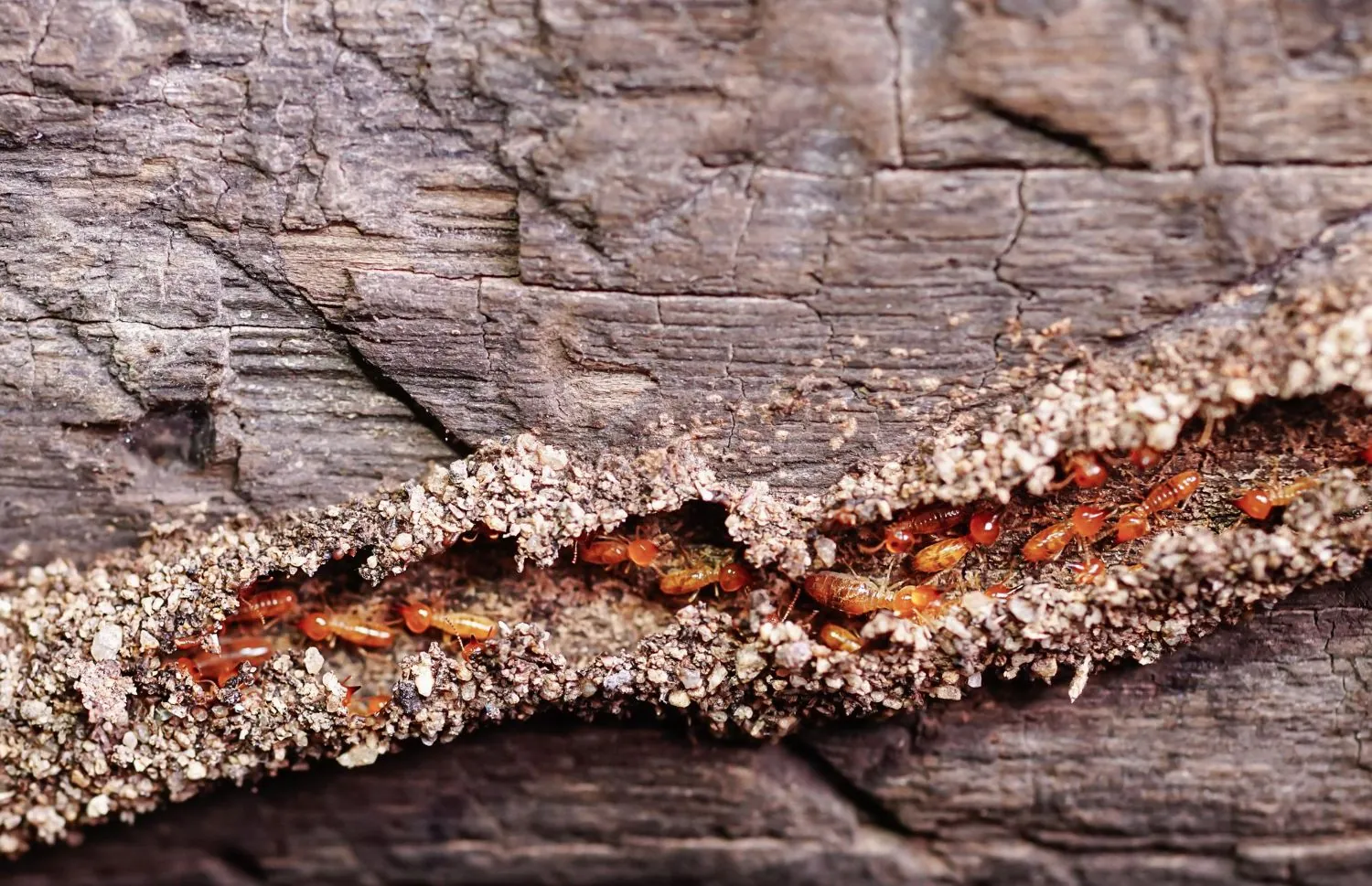
Buying or selling a home in southeastern North Carolina comes with a long checklist, and somewhere on that list you will likely find a requirement for a "termite letter." In Bladen County, Brunswick County, and across the Carolinas, that document is formally known as a Wood-Destroying Insect Report, or WDIR. If your lender or real estate agent has asked for one, you are not alone, and the process is more straightforward than it sounds.
A WDIR confirms whether wood-destroying insects are present in a property and documents any visible evidence found. It is one of the most common inspection requirements in a home sale, yet many buyers and sellers have never heard the term until it appears in their closing paperwork. This guide explains what a Wood-Destroying Insect Report is, why you need one, and what to expect when you schedule an inspection in our region.
Quick Summary
- A Wood-Destroying Insect Report (WDIR) is an official document confirming the presence or absence of wood-destroying insects in a home, along with any visible evidence.
- In South Carolina, the same report is commonly called a CL-100.
- Most mortgage lenders require a current WDIR before approving a home purchase or refinance.
- The inspection covers subterranean termites, carpenter ants, carpenter bees, powder post beetles, and wood borers.
- McDuffie Pest Control provides WDIR and CL-100 inspections across southeastern NC and northeastern SC, including Bladen and Brunswick counties.
What Is a Wood-Destroying Insect Report?
A Wood-Destroying Insect Report is a standardized inspection document that records whether wood-destroying insects are present in a property and notes any visible evidence they may have caused. It is completed by a licensed inspector who conducts a visual examination of the home and then documents the findings on an official form. The report becomes part of the paperwork that moves a real estate transaction toward closing.
In North Carolina, the document is referred to as a WDIR. In South Carolina, the equivalent report is the CL-100. The two reports serve the same purpose and follow similar inspection and documentation standards, so whether your transaction is in NC or SC, the goal is the same: a clear, official record of the home's status.
People often call this document a "termite letter," and that nickname is understandable, since termites are the primary concern in our area. The report covers more than termites alone, but the shorthand has stuck. When a lender or agent asks for a termite letter for a closing in NC, they are almost always referring to a WDIR.
Why You Need a WDIR for a Home Sale
The most common reason buyers and sellers need a WDIR is that the mortgage lender requires it. Lenders want assurance that the property securing the loan does not have active termites or other wood-destroying insects. A current WDIR gives them that assurance and keeps the loan approval on track.
There are several situations where a Wood-Destroying Insect Report comes into play during a home sale:
- Home buyers typically need a WDIR because the lender requires it before closing. The report protects your investment by confirming the property is free of active infestation or by flagging issues that should be resolved before the sale is final.
- Home sellers often choose to have a WDIR completed before listing. A clean report gives buyers and their lenders confidence, and if an issue surfaces, you have time to address it on your own terms rather than under closing-day pressure.
- Refinancing homeowners may be asked for a current termite letter as a condition of the new loan. If your lender has requested one, scheduling early keeps your refinance moving.
For a transaction in Bladen County, Brunswick County, or anywhere along the coast, the WDI report is rarely the step that should hold up your closing. The key is scheduling it early enough that the inspection and any follow-up fit comfortably within your timeline.
What the Inspection Covers
During a WDIR inspection, the technician conducts a visual examination of all accessible areas of the property. The report covers the wood-destroying insects most common in our region, not just termites. Specifically, the inspection looks for evidence of:
- Subterranean termites
- Carpenter ants
- Carpenter bees
- Powder post beetles
- Wood borers
Beyond the insects themselves, the inspection also notes conditions that make a home vulnerable to future infestation. These include moisture problems, wood-to-soil contact, and construction features such as slabs or dirt-filled porches that can give insects a hidden path into the structure.
The technician examines the areas where activity is most likely to appear. That generally includes the crawl space, the attic if it is accessible, the interior living spaces, and the home's exterior. Any areas that are obstructed or inaccessible at the time of the visit are noted on the report, which keeps the documentation honest and complete.
The WDIR Process from Request to Closing
Understanding the steps ahead makes the whole process feel less daunting. A typical Wood-Destroying Insect Report follows a clear path:
- Schedule the inspection. Contact a licensed provider and let them know your closing or refinance timeline so the visit can be planned accordingly.
- Complete the inspection. A technician performs a visual examination of all accessible areas, including the crawl space, attic, interior, and exterior. Most inspections take between 30 and 90 minutes depending on the size and accessibility of the home.
- Document the findings. The technician records the results on the official report form, noting any evidence of wood-destroying insects, conducive conditions and any inaccessible areas.
- Deliver the report. The completed report is provided to you and, when needed, shared with your lender or agent so the transaction can continue.
- Address any findings. If insects or evidence is documented, treatment options are discussed. In many transactions, treatment is negotiated between buyer and seller as part of the closing.
The goal at every step is to keep your transaction on schedule. When timing is tight, working with a provider who understands the urgency of the closing process makes a real difference.
WDIR vs. a Standard Termite Inspection
Buyers sometimes assume a WDIR and a termite inspection are the same thing. There is overlap, but the two are not identical. A standard termite inspection focuses on termites and is often part of routine home maintenance or preventive care. A WDIR is broader and produces an official document tied to a real estate transaction.
|
Feature |
Standard Termite Inspection |
Wood-Destroying Insect Report (WDIR) |
|
Primary focus |
Termites |
Termites plus other wood-destroying insects |
|
Insects covered |
Termites |
Termites, carpenter ants, carpenter bees, powder post beetles, wood borers |
|
Produces an official document |
Not always |
Yes, on a standardized form |
|
Commonly required for closings |
No |
Yes |
|
Known as a CL-100 in SC |
No |
Yes |
In short, every WDIR includes a thorough look for termites, but it also accounts for the other insects that can infest the wood in a Carolina home. If you want a deeper look at termite-specific treatment options, our termite control page walks through inspections, liquid treatment, and Sentricon bait systems in detail.
WDIR and CL-100 in Bladen, Brunswick, and the Grand Strand
Our service area sits right along the North Carolina and South Carolina line, which means real estate transactions here can fall under either the WDIR or the CL-100 standard depending on the property's location. A home sale in Elizabethtown or elsewhere in Bladen County uses the NC WDIR. A property on the South Carolina side, including the Grand Strand and the Myrtle Beach area, typically calls for a CL-100.
This region also happens to be high-pressure territory for wood-destroying insects. The warm, humid climate that makes coastal Carolina living so appealing also creates ideal conditions for subterranean termites and the moisture problems that attract them. That combination is exactly why lenders here lean on the WDI report as a routine part of the process.
McDuffie Pest Control has been protecting homes across this area since 1964, and our team includes an Associate Certified Entomologist. We provide both WDIR and CL-100 inspections for buyers, sellers, agents, and lenders throughout southeastern NC and northeastern SC. If you want the full picture of what a report entails before you schedule, our WDIR service page covers the details.
Frequently Asked Questions
How long does a WDIR inspection take?
Most WDIR inspections take approximately 30 to 90 minutes, depending on the size and accessibility of the property. The technician inspects all accessible areas of the home, including the crawl space, attic, interior, and exterior.
What happens if wood-destroying insects are found?
If the inspection reveals evidence of wood-destroying insects, the report documents the findings in detail. From there, treatment options can be discussed. In many real estate transactions, treatment is negotiated between the buyer and the seller as part of the closing process.
Is a WDIR the same as a termite inspection?
A WDIR is broader than a termite inspection alone. While termites are a primary concern, the report also covers carpenter ants, carpenter bees, powder post beetles, and wood borers, along with conditions that could make the property vulnerable to future infestations.
What is a CL-100 report?
CL-100 is the term commonly used in South Carolina for a Wood-Destroying Insect Report. The inspection and documentation requirements are similar to the WDIR used in North Carolina. McDuffie Pest Control provides both reports across our service area.
Who pays for the WDIR, the buyer or the seller?
This varies by transaction and is usually spelled out in the purchase agreement. In some sales the buyer arranges it as part of their due diligence, while in others the seller provides a report before listing. Your real estate agent can clarify how it is typically handled in your situation.
Schedule Your WDIR with Confidence
A Wood-Destroying Insect Report does not have to be a source of stress in your home sale. When you understand what it covers and schedule it early, the WDIR becomes one more box checked on the way to a smooth closing. The most important thing is to work with an experienced, licensed provider who knows the region and respects your timeline.
If you are buying, selling, or refinancing a home in southeastern North Carolina or northeastern South Carolina, McDuffie Pest Control can provide the WDIR or CL-100 you need. Contact us to schedule your inspection, and we will get you the documentation required to move forward with confidence.