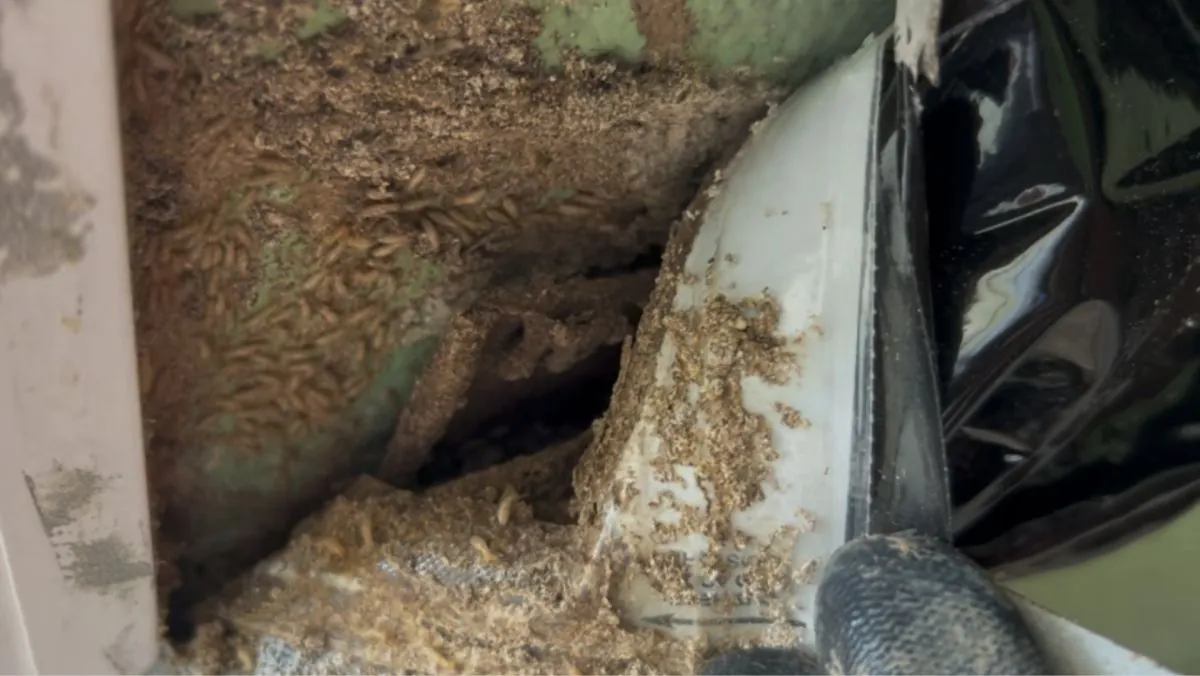
Every spring, homeowners across southeastern North Carolina notice the same unsettling sight: a sudden cloud of winged insects near a window, a porch light, or a sliding glass door. For many people, that swarm is the first sign of a termite problem they never knew they had. Understanding termite season in our region helps you recognize the warning signs early and protect one of your largest investments.
Termite season in NC is driven by our warm, humid climate, which gives subterranean termites in southeastern NC nearly ideal conditions to thrive. The swarms are seasonal, but the colonies behind them work year-round. This guide explains when termites swarm, how to tell a termite swarmer from a flying ant, the signs of termites to watch for, and exactly what to do if you spot them.
Quick Summary
- Termite swarms in southeastern NC are most common from March through June, with peak activity in April and May.
- A swarm is often the first visible sign of an established termite colony nearby.
- Termite swarmers and flying ants look similar but differ in their antennae, waist, and wings.
- Key signs of termites include mud tubes, discarded wings, hollow-sounding wood, and bubbling paint.
- Worker termites feed 24 hours a day year-round, so protection is a 12-month concern, not just a spring one.
When Is Termite Season in the Carolinas?
In southeastern North Carolina and northeastern South Carolina, subterranean termite swarmers emerge primarily from March through June, with peak activity in April and May. Swarmers are the reproductive members of a colony, and their job is to leave the established nest, pair off, and start new colonies of their own. When you see a termite swarm, it usually means a mature colony has been active nearby for some time.
It helps to understand why swarms cluster in spring. Termites tend to swarm on warm days, often after a rain, when temperature and humidity line up just right. That is why so many homeowners report seeing them on a mild, damp afternoon rather than a cold or dry one.
The seasonal swarm can give a false impression, though. While swarmers appear for only a short window, the worker termites that actually cause damage are active year-round, feeding on wood 24 hours a day. So termite season is really the time when termites become visible, not the only time they are at work.
What a Termite Swarm Looks Like
A termite swarm can be dramatic. Hundreds of winged insects may appear seemingly out of nowhere, often indoors near a light source or a window where they are drawn to the light. The swarm itself rarely lasts long, but the evidence it leaves behind is an important clue.
After swarmers pair off, they shed their wings. Finding small piles of discarded, identical wings on a windowsill, near a door, or around a light fixture is a classic indicator that a swarm has occurred. The wings often look like tiny fish scales scattered across a surface.
Swarmers themselves do not bite, sting, or damage wood. Their presence is a signal rather than the threat. The real concern is the colony they came from, which may have been quietly feeding on the structure of your home for years.
Termite Swarmer vs. Flying Ant
One of the most common questions during termite season is whether those winged insects are termites or simply flying ants. The two are easy to confuse at a glance, but three features tell them apart reliably.
|
Feature |
Termite Swarmer |
Flying Ant |
|
Antennae |
Straight and bead-like |
Bent or elbowed |
|
Waist |
Thick and straight, no pinch |
Narrow and clearly pinched |
|
Wings |
Two pairs of equal length |
Front wings longer than rear wings |
If you find winged insects or shed wings indoors during the spring, especially near windows or lights, it is worth confirming what they are. Flying ants are a nuisance, but termite swarmers point to a wood-destroying colony that needs attention. When you are not sure, collecting a few specimens in a sealed bag and having them identified is the safest move.
Signs of Termites to Watch For
Swarmers are the most obvious sign of termites, but they are not the only one. Termites are often called "silent destroyers" because they can do significant damage before a homeowner notices anything is wrong. Knowing the quieter signs helps you catch a problem earlier.
Watch for these indicators of termite activity:
- Mud tubes on foundation walls, piers, or crawl space supports. These pencil-sized tunnels are how subterranean termites travel between the soil and your home.
- Discarded wings near windows, doors, or light fixtures, especially in spring.
- Hollow-sounding wood when tapped, particularly in structural areas.
- Bubbling or peeling paint that can resemble water damage.
- Soft or spongy spots in flooring or other wood surfaces.
- Visible damage to wood structures, trim, or framing.
If you notice any of these signs, it is best not to wait. Termite damage only worsens with time, and early detection can save thousands of dollars in repairs. A professional inspection is the most reliable way to determine whether termites are active in your home.
What to Do If You Spot Swarmers
Seeing a termite swarm is alarming, but a calm, methodical response serves you better than panic. If swarmers appear in or around your home, take these steps:
- Stay calm and avoid spraying. Reaching for an over-the-counter pesticide will not address the colony, and it can make a later professional inspection harder.
- Do not disturb mud tubes or damaged wood. Leaving the evidence intact helps a technician assess the situation accurately.
- Collect a few samples. Capture several swarmers or some shed wings in a sealed bag or container so the species can be confirmed.
- Note where you found them. The location of a swarm, indoors versus outdoors and near which part of the home, helps narrow down where the colony may be.
- Schedule a professional inspection. A licensed technician can confirm whether you have an active infestation and recommend the right course of action.
Acting promptly matters. The sooner the colony is identified and addressed, the less damage it can do to your home.
Year-Round Protection in Our Region
Because swarmers appear in spring, it is tempting to think of termites as a seasonal threat. In reality, the workers feed continuously, which is why protection in southeastern NC is best thought of as a year-round commitment. Swarm season is a useful reminder to schedule an inspection, but it is not the boundary of the risk.
Moisture plays a major role in termite pressure here. Subterranean termites depend on humidity, and damp crawl spaces, poor drainage, and standing water all make a home more attractive to them. Addressing those conditions reduces the conditions that draw termites in the first place, which is why our moisture and crawl space services often work hand in hand with termite protection.
A thoughtful, year-round approach reflects the principles of Integrated Pest Management: inspect regularly, reduce conducive conditions, and treat with the right method for the property. McDuffie Pest Control has protected homes in this region since 1964, and as Certified Sentricon Specialists, our technicians can recommend the approach that fits your home. Our termite control page explains liquid treatment, Sentricon bait systems, inspections, and annual renewal plans in more detail.
Frequently Asked Questions
When do termites swarm in southeastern NC?
Termite swarms in southeastern North Carolina are most common from March through June, with peak activity in April and May. Swarmers tend to emerge on warm days, often after rain, when temperature and humidity are favorable.
Are termite swarmers harmful?
Swarmers themselves do not bite, sting, or damage wood. Their presence is a warning sign that an established colony is nearby, and that colony is the real concern.
How do I tell a termite swarmer from a flying ant?
Look at three features. Termites have straight, bead-like antennae, a thick straight waist, and two pairs of equal-length wings. Flying ants have elbowed antennae, a pinched waist, and front wings that are longer than the rear wings.
If I see one swarmer, does that mean I have an infestation?
Not necessarily, but it is worth investigating. A single swarmer outdoors may have drifted from elsewhere, while swarmers indoors strongly suggest a colony in or very near the structure. A professional inspection is the only way to know for certain.
Are termites only active during swarm season?
No. Swarmers appear seasonally, but worker termites feed on wood year-round, around the clock. That is why termite protection is a 12-month concern rather than a springtime one.
Stay Ahead of Termite Season
Termite season in southeastern NC arrives every spring, but the colonies behind those swarms never really rest. Recognizing the signs early, telling a swarmer from a flying ant, and responding calmly when you spot them all give you a real advantage in protecting your home. The biggest mistake is assuming the problem ends when the swarm disappears.
If you have seen swarmers, found shed wings, or simply want peace of mind before peak season, McDuffie Pest Control can help. Contact us to schedule a termite inspection, and our team will evaluate your property, explain what we find, and recommend a protection plan built around your home.