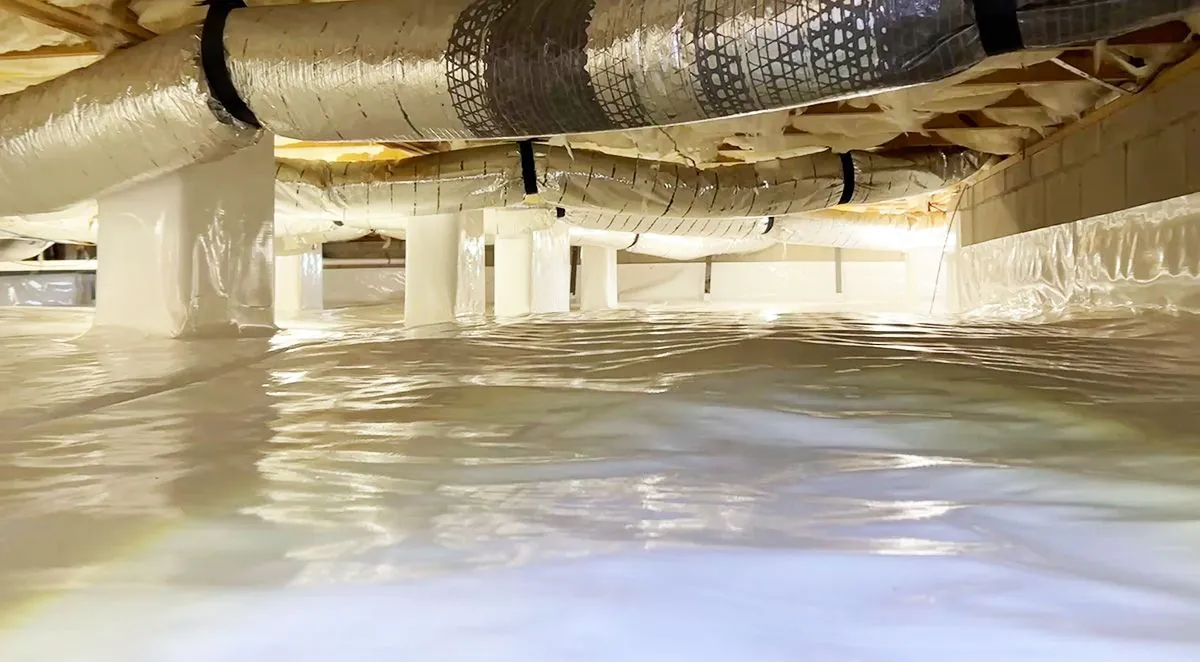
If you've started researching how to fix a damp crawl space in North Carolina, you've probably run into two options that sound similar but aren't: a vapor barrier and full crawl space encapsulation. Both help control moisture, but they solve different problems and involve very different levels of work.Oftentimes the culprit for moisture turns out to be HVAC duct lines that “sweat” during the summer months. Our technicians are trained to evaluate moisture sources and suggest the best plan for each scenario.
Choosing between them isn't always obvious, especially when every contractor seems to recommend the more expensive option. This guide breaks down the vapor barrier vs. crawl space encapsulation decision for NC homeowners so you can understand exactly what you're paying for and what your home actually needs.
Quick Summary
- A vapor barrier is a ground liner laid over crawl space soil to block ground moisture from rising into your home. It's the more affordable, entry-level option.
- Full crawl space encapsulation seals the entire space, including walls and vents, and a dehumidifier for complete moisture control.
- Vapor barriers work well in drier, stable crawl spaces; encapsulation is better for homes with persistent humidity, standing water, or wood-destroying insect risk.
- The right choice depends on your crawl space's condition, your local climate, and your long-term goals.
- McDuffie Pest Control offers both crawl space encapsulation options in NC and can inspect your home before you decide.
What a Vapor Barrier Actually Does
A vapor barrier is the foundation of nearly every crawl space moisture control strategy. Understanding how it works helps you see where it fits, and where it falls short.
How Vapor Barriers Work
The soil under your home is never truly dry. Even when it looks fine, moisture continuously evaporates from the ground and rises into the crawl space as water vapor. That vapor raises humidity, dampens wood framing, and creates the conditions mold and pests love.
A vapor barrier is a thick polyethylene sheet laid across the crawl space floor to block that upward migration of moisture. When installed correctly, the seams overlap and the material runs to the foundation walls. Proper vapor barrier installation in NC homes can dramatically reduce ground-source humidity without any mechanical equipment.
When a Vapor Barrier Alone Is Enough
A vapor barrier by itself can be the right call in specific situations. If your crawl space is relatively dry, has good drainage around the foundation, has no HVAC duct lines and shows no signs of standing water or active moisture damage, a barrier may control the problem on its own.
This option also suits homeowners who want meaningful protection on a tighter budget. It addresses one of the single largest sources of crawl space moisture, ground evaporation, at a fraction of the cost and complexity of a full system. For many stable NC crawl spaces, that's genuinely sufficient.
What Full Crawl Space Encapsulation Includes
Encapsulation takes the vapor barrier concept and extends it to the entire crawl space. Instead of covering only the floor, the goal is to seal the space off from outside air and ground moisture completely.
The Components of a Sealed System
A full encapsulation system typically brings together several elements working as one. These usually include:
- A heavy-duty liner covering the floor and running up the foundation walls
- Sealed and insulated crawl space vents to keep humid outside air out
- A sealed access door
- A dedicated crawl space dehumidifier to actively manage remaining humidity
- Taped and sealed seams throughout for a continuous, airtight barrier
Together, these components turn a vented, weather-exposed crawl space into a conditioned, controlled environment closer to the rest of your home.
What Encapsulation Adds That a Barrier Doesn't
The biggest difference is active control. A vapor barrier passively blocks ground moisture, but it can't do anything about humid summer air drifting in through open vents, which is a major issue across NC's warm, muggy months.
Encapsulation closes that gap. By sealing the vents and adding a crawl space dehumidifier, an NC home gets year-round humidity management rather than partial protection. That's what makes it the stronger choice for homes with ongoing moisture struggles.
Vapor Barrier vs. Encapsulation: Side by Side
The clearest way to compare crawl space encapsulation options is feature by feature. The table below shows how the two approaches stack up.
|
Factor |
Vapor Barrier |
Full Encapsulation |
|
Ground moisture control |
Yes |
Yes |
|
Humid outside air control |
No |
Yes |
|
Includes dehumidifier |
No |
Yes |
|
Sealed vents and walls |
No |
Yes |
|
Relative investment |
Lower |
Higher |
|
Best for |
Drier, stable crawl spaces |
Persistent humidity or moisture damage |
|
Long-term durability |
Good |
Excellent |
For exact pricing on either option, reach out to our team directly, since every crawl space is different and costs depend on size and condition.
How to Decide Which Is Right for Your NC Home
The best way to choose is to look honestly at your crawl space's current condition. A few key factors point clearly toward one option or the other.
Consider a vapor barrier if your crawl space stays reasonably dry, you have no history of standing water, and your foundation drainage is sound and there are no HVAC duct lines. In these cases, blocking ground moisture may be all you need.
Lean toward full encapsulation if you've noticed musty odors, visible condensation, standing water, sagging insulation, or high humidity readings. These are signs that ground moisture is only part of the problem and that humid air is also a factor.
Wood-destroying insect risk is another deciding factor. Damp crawl spaces attract termites and other pests that thrive in moisture, so homes with a history of these issues benefit from the more complete protection encapsulation provides. If you're unsure where your home falls, a professional moisture inspection removes the guesswork.
Where the Dehumidifier Fits In
The crawl space dehumidifier is the piece that most often separates a good result from a great one. Even a well-sealed space can hold residual humidity, and NC's climate makes that especially likely.
A dedicated unit continuously pulls excess moisture from the sealed air and keeps relative humidity in a safe range. This protects wood framing, discourages mold growth, and keeps the space genuinely dry rather than just isolated. In most full encapsulation projects, the dehumidifier is what delivers the long-term, worry-free performance homeowners are really after.
Common Crawl Space Mistakes to Avoid
Homeowners often run into the same avoidable problems when tackling crawl space moisture. Knowing them ahead of time saves money and frustration.
- Choosing based on price alone. The cheapest option isn't always the right one, and neither is the most expensive. Matching the solution to your crawl space's actual condition is what delivers value.
- Skipping the inspection. Guessing at moisture levels by eye is unreliable. A proper inspection measures real humidity and reveals problems you can't see from the access door.
- Using thin, hardware-store sheeting. Lightweight plastic tears easily and rarely seals well at the seams. Professional-grade materials are worth it for a barrier meant to last years.
- Ignoring the vents. Sealing the floor while leaving vents open lets humid NC air keep pouring in. That's why encapsulation addresses both sources at once.
- Treating it as a one-time fix. Even a sealed crawl space benefits from occasional checkups. A quick annual look confirms everything's still performing as it should.
Steering clear of these mistakes helps ensure whichever option you choose actually solves the problem for the long term.
Moisture, Mold, and Wood Protection
There's an important connection worth understanding: crawl space moisture doesn't just feel unpleasant, it actively threatens your home's structure and air in the crawl space becomes air in the living quarters. Sustained dampness encourages mold and fungus, and it creates ideal conditions for wood-destroying insects like termites.
Our team addresses this on the prevention side through moisture control, fungus treatment, and crawl space encapsulation. If moisture has already led to significant structural damage, replacing or rebuilding compromised framing falls to a licensed general contractor, but keeping the space dry is exactly how you avoid reaching that point.
Because moisture and termites go hand in hand, many homeowners pair crawl space work with a preventative termite service. Controlling humidity is one of the most effective ways to make your home less inviting to these pests in the first place.
Frequently Asked Questions
How long does a vapor barrier last?
A quality vapor barrier can last many years when it's properly installed and left undisturbed. Thicker, professional-grade materials hold up far better than the thin sheeting sold at hardware stores, and correct seam overlap makes a big difference in longevity.
Will encapsulation lower my energy bills?
Many homeowners see improved energy efficiency after encapsulation because sealing the crawl space reduces the humid air your HVAC system has to fight. Results vary by home, but a drier, sealed crawl space generally makes the whole house easier to heat and cool.
Can I install a vapor barrier myself?
You can, but crawl spaces are tight, dirty, and easy to get wrong. Improper seam overlap, gaps at the walls, or damaged sheeting can leave much of the moisture problem unsolved. Professional installation ensures the barrier actually performs the way it's supposed to.
Do I need encapsulation if my crawl space seems dry?
Not necessarily. A crawl space that stays consistently dry with good drainage may only need a vapor barrier. The best way to know for sure is a moisture inspection, which measures actual humidity rather than relying on how the space looks.
Does moisture control really affect pests?
Yes. Many common pests, including termites, are drawn to damp environments. Reducing crawl space moisture makes your home significantly less attractive to them and supports a broader Integrated Pest Management approach.
Making the Right Call for Your Home
The vapor barrier vs. crawl space encapsulation decision comes down to matching the solution to your home's real needs. A vapor barrier is a smart, cost-effective choice for drier, stable crawl spaces, while full encapsulation delivers complete, year-round protection for homes battling persistent moisture.
You don't have to figure it out alone. With more than 60 years serving southeastern North Carolina, our team can inspect your crawl space, measure the actual moisture levels, and recommend the option that genuinely fits, never the one that simply costs more. Learn more about our moisture and crawl space services or contact us to schedule an evaluation.
Protecting your crawl space protects your entire home. Whichever option is right for you, getting the moisture under control is one of the best investments you can make in your NC home's health and longevity.